
Close

Home » Explore » Experiences to enjoy » Parks and nature » The Submerged Caves of Argentarola
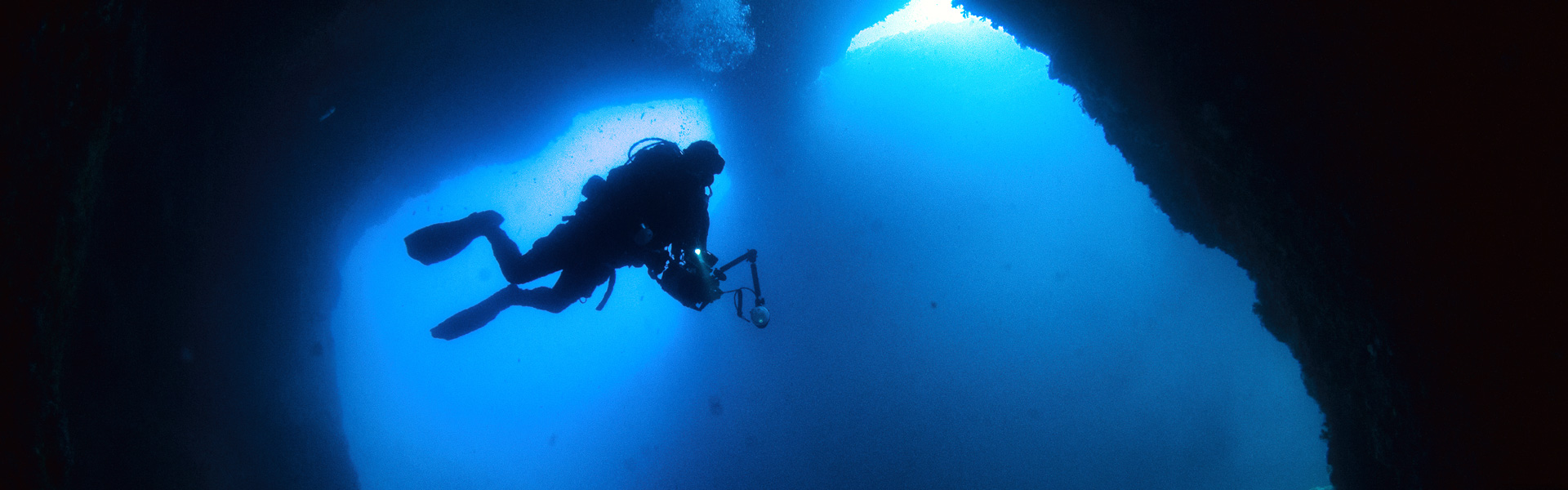
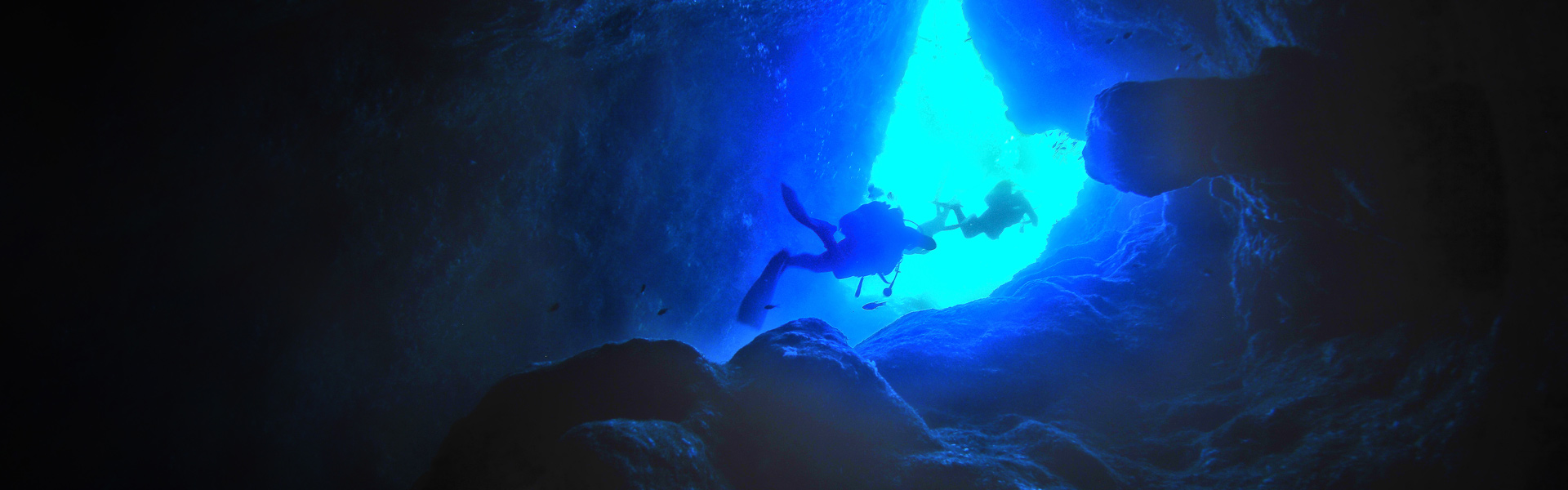
The islet of Argentarola, located on The Argentario Peninsula, is home to three submerged karst caves: the Grotta Grande dell’Argentarola, the Grotta delle Cicaline, andthe Antro delle Paramuricee.
The islet of Argentarola is a rocky formation with bare, steep slopes, featuring a surface layer of calcium carbonate and iron oxide, and covered at the summit with low Mediterranean scrub. It rises 450 meters off the western coast of the promontory (long. 01°22'11" W – lat. 42°25'03" N) and has a perimeter of approximately 600 meters with a surface area of 9,850 square meters; it is 205 meters long, with a maximum width of 75 meters and a height of 50 meters. It is surrounded by waters that, on the side facing the open sea, range from 40 to 65 meters deep.
The lithological natureof the Argentarola in an above-ground setting has allowed karst phenomena to develop within it, resulting in the formation of three cavities known as the Grotta Grande dell’Argentarola, the Grotta delle Cicaline, andthe Antro delle Paramuricee, which are now submerged and open onto the slope facing theArgentario. The Grotta Grande dell’Argentarola —first explored in December 1960—is certainly the most significant of the three, both in terms of size and morphological interest; furthermore, the abundance of limestone concretions, stalactites, stalagmites, and stalactite-stalagmite columns gives it a truly unique charm.
Registered under number T/GR-1101, it is identified on Sheet 135 (III SE Monte Argentario) at coordinates 01°22'10"W – 42°25'03"N and has a planimetric length of 97 meters with a floor area of 720 square meters. The only entrance consists of a small opening in its upper part at a depth of -6 m; the interior is of extraordinary beauty with stunning crevices where it is easy to encounter sponges, corals, crustaceans, and some groups of fish such as the bearded seabream (Apogon imberbis) and the black seabream (Johnius umbra). Unfortunately, however, such beauty comes with a high degree of danger; therefore, to facilitate diving for the many divers who explore it, a 25-meter-long nylon line has been secured inside, stretching from a boulder at the entrance to the main stalagmite.
Grotta delle Cicaline – Smaller than the previous cave, it exhibits different morphological and genetic characteristics. Its entrance is located at an elevation of -5 m below sea level, situated along a subvertical rock fracture that is clearly visible, especially at the surface.
From a biological standpoint, it has a fairly rich population that is, in any case, similar to the most common cave biocoenoses. The most abundant fauna consists of fish, crustaceans, sponges, serpulids, bryozoans, small ascidians, and gorgonians.
The high clarity of the water allows for striking images, and the abundance of benthic fauna makes for beautiful macro photography; for this reason, it has become a frequent destination for many divers, who also explore it due to its shallow depth.
Registered under number T/GR-1102, it has a length of 16 meters and a floor area of 105 square meters, with a vertical drop of -10 meters. Its location is defined by the coordinates 01°22'13"W – 42°25'02"N, sheet 135 (III SE Monte Argentario).
Antro delle Paramuricee – It is located at an elevation of -31 meters below sea level beneath the western tipof Argentarola, where it penetrates the rock face for at least 14 meters horizontally.
The area teems with life, especially on the ceiling, where there are numerous fans of red gorgonian (Paramuricea clavata)—from which the cave takes its name—as well as a wide variety of red coral branches (Corallium rubrum) and a dense swarm of Parapandalus narval and Stenus spinosus.
It is registered under number T/GR-1103, coordinates 01°22'18" W – 42°25'02" N, sheet 135 (III SE Monte Argentario); maximum elevation difference 11.50 m; planimetric length 19 meters.
The Argentarola Cave is located on a small islet about 450 meters off the coast of Monte Argentario, near Cala Moresca. To reach it, you must joina diving excursion organized by local diving centers, asaccess is only possible by sea.
The cave is accessible only to experienced divers with the appropriate certification who are capable of diving to a depth of approximately 5 meters. Inside, there is a main chamber featuring stalactites and stalagmites, but visibility may be limited due to sediment on the floor. Some narrow passages makethe dive challenging and suitable only for those with experience in complex environments; therefore, it is not suitable for beginners or people without specific training.
The cave is accessible only to experienced divers with the appropriate certification who are capable of diving to a depth of approximately 5 meters. Inside, there is a main chamber featuring stalactites and stalagmites, but visibility may be limited due to sediment on the floor. Some passages are narrow, and the dive requires experience in complex environments; therefore, it is not suitable for beginners or those without specific training.
To provide the best possible experience, we use technologies such as cookies to store and/or access information on your device. By consenting to these technologies, we may process data such as your browsing behavior or unique identifiers on this site. Failure to consent or withdrawal of consent may adversely affect certain features.

