
Close

Home » Argentario » Porto Santo Stefano
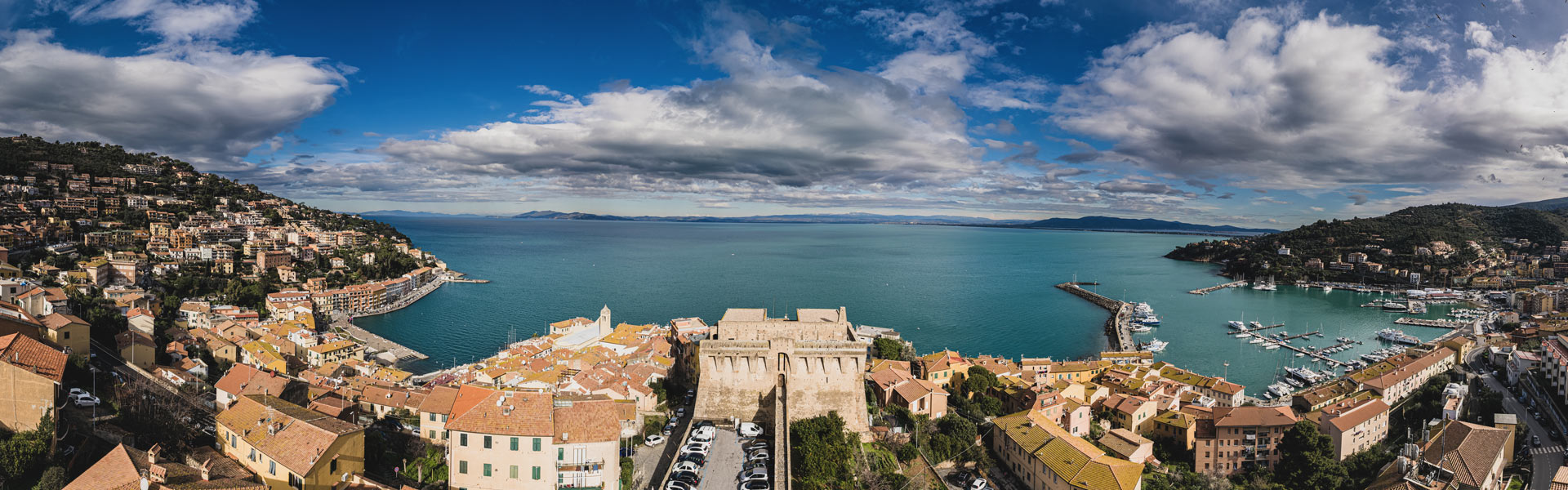
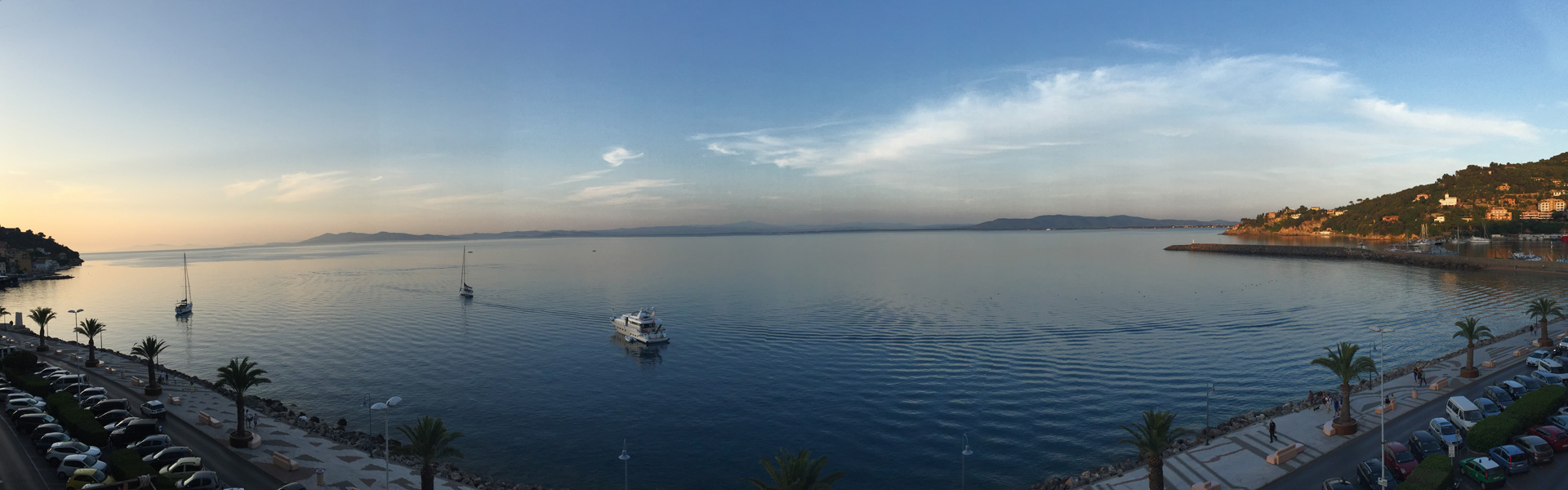
Porto Santo Stefano, a picturesque seaside town with a population of about 9,000, overlooks the Tyrrhenian Sea and offers a unique view that stretches all the way to Talamone and the Uccellina Nature Reserve. Its history, which dates back to Roman times, spans the era of pirate raids and its development under Spanish rule.
Porto Santo Stefano is a fishing village with a population of about 9,000, located north of theArgentario , offering a unique view of the Tyrrhenian Sea, stretching all the way to Talamone and the Uccellina Nature Reserve. The town’s defining feature is its strong connection to the sea; in fact, it stretches between the commercial port of Valle—where ferries depart for the islands of Giglio and Giannutri, and where the fishing fleet and recreational boats are based—and the old port of Pilarella, used primarily during the summer months for small boats and large yachts.
Porto S. Stefano’s history has been shaped by its strategic location, the topography of the area, and its mild climate. Its first distinguished visitors were the Domizi Enobarbi family during the Roman era, who chose the northern part of theArgentario to build their villa for leisure. The remains of this imposing structure are still present and clearly visible today.
The numerous pirate raids between the 15th and 16th centuries caused the harbor of Porto S. Stefano to lose its status as a safe haven for boats. In fact, during the period of rule by the Republic of Siena, several coastal towers began to be built, notably the Argentiera Tower in the upper part of the town, far from the sea. It was then around the mid-16th century, under Spanish rule, that the town underwent its first major development with the construction of the Spanish Fortress and the coastal watchtowers —still standing today—to defend the State of the Presidi.
Under the Grand Duchy of Tuscany, in 1842 under Leopold II, the community of Monte Argentario was established, with Porto S. Stefano as its capital and Porto Ercole as a hamlet.
In 1860, it played a key role as a vital stopover for the Expedition of the Thousand, providing the water and coal essential for their voyage to Marsala. During World War II, Porto S. Stefano was heavily bombed by the Allies, making it the second-most heavily bombed municipality in Italy, as the town had been chosen by the Germans as a logistics base of critical importance.
The reconstruction played a decisive role in the recovery and development of the town as we know it today—a charming tourist destination and the pearl of the Tyrrhenian Sea.
To provide the best possible experience, we use technologies such as cookies to store and/or access information on your device. By consenting to these technologies, we may process data such as your browsing behavior or unique identifiers on this site. Failure to consent or withdrawal of consent may adversely affect certain features.


