
Close
Home » Explore » Experiences to Enjoy » The Fortresses » The Aldobrandesca Fortress
A defensive fortress that has undergone several transformations over the years, housing a lighthouse since 1826 and serving as a prison before being sold to private owners after World War II.
“We took you to a place of crumbling stone and to the seashore.”
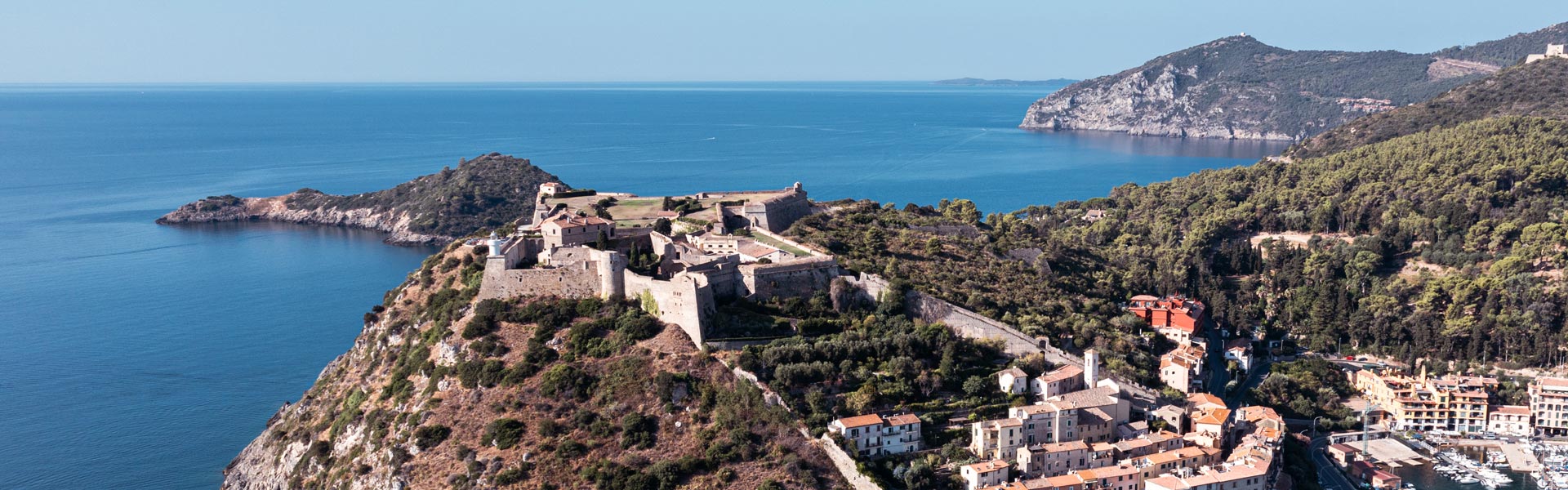
Rocca: a fortress, a hawk’s talon, a lion’s paw perched on a hill. Not even a hill, but a cliff overlooking the sea, stone watchtowers perched high above the beaches, a simple line drawn by the most skilled and sophisticated mathematician.”
This is how the famous poet Robert Penn Warren described the Rocca Aldobrandesca in a poem while spending his vacations in Porto Ercole between 1954 and 1956.
The construction of the first tower of this fort, carried out by the Aldobrandeschi family, dates back to 1296; however, the structure we see today is the result of work undertaken at the behest of Philip II in 1558, following the capture of Porto Ercole in 1555.
Cosimo I, an ally of the King of Spain, sent his best architects, such as Bernardo Buontalenti and Giovanni Camerini, who, with military advice from Chiappino Vitelli, rebuilt and expanded the fort according to the principle of horizontal defense.
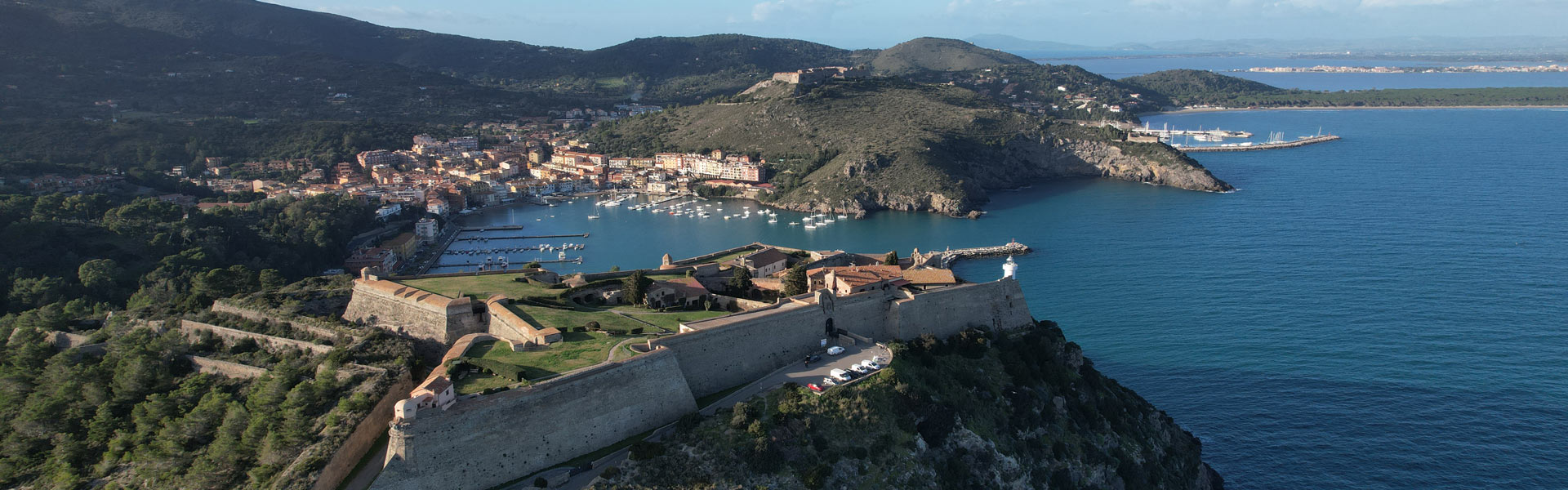
They built a four-sided fortress with the ramparts on the south side longer than those on the north, surrounded by an outer structure with low walls and escarpments.
The bastioned fortifications, with their points and spurs, make use of the terrain’s natural protrusions and irregularities to blend the structure into the ground and evade artillery fire.
Access is from the east via a drawbridge spanning a wide dry moat, from which rise the bastions and curtain walls, featuring a high scarp base and a parapet.
The most commonly used material is grayish-yellowsandstone. On the flat section facing northwest, there is a triple system of walls with three corresponding moats.
Standing 70 meters above sea level, it covers an area of approximately 1,700 square meters. It has housed the Porto Ercole lighthouse since 1826, and before being sold to private owners after World War II, it had been converted into a prison.
Access to the point of interest
Indoor access: limited; not wheelchair accessible.
The interior spaces, stairs, and drawbridges do not have ramps or elevators.
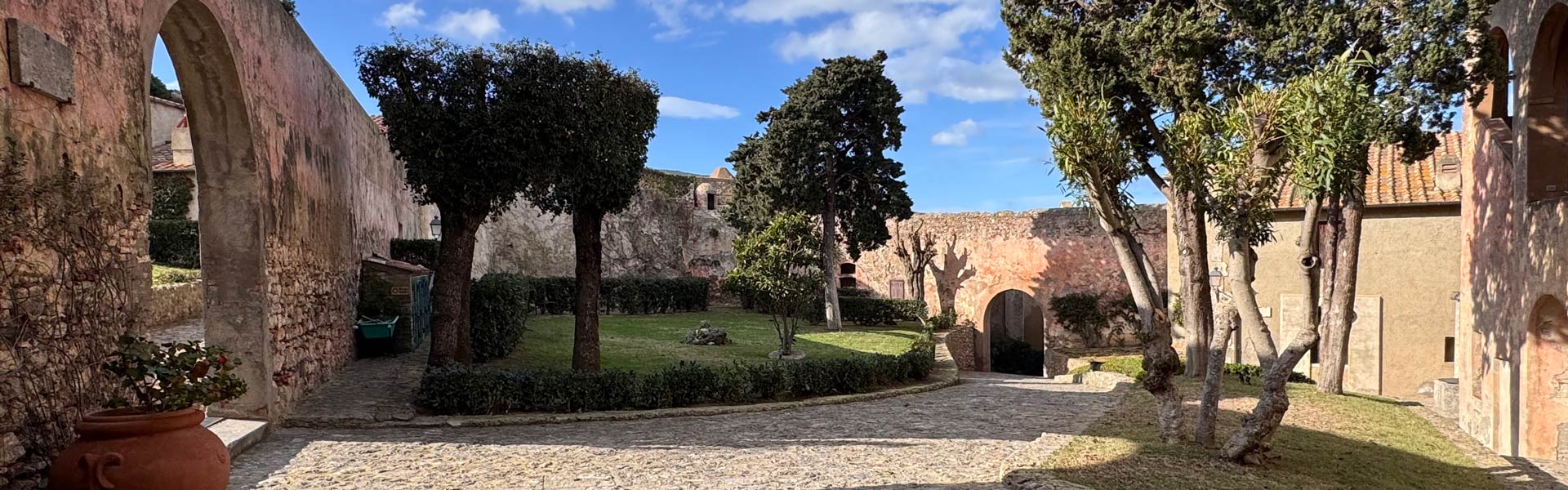
Outdoor area and plaza:
Accessible on foot or by car,
but the pavement is uneven and there may be steps.
Recommended:
It is best to be accompanied if you have limited mobility
To provide the best possible experience, we use technologies such as cookies to store and/or access information on your device. By consenting to these technologies, we may process data such as your browsing behavior or unique identifiers on this site. Failure to consent or withdrawal of consent may adversely affect certain features.

