
Close
Home » Explore » Experiences to Enjoy » The Old Town of Porto Ercole » Governor’s Palace
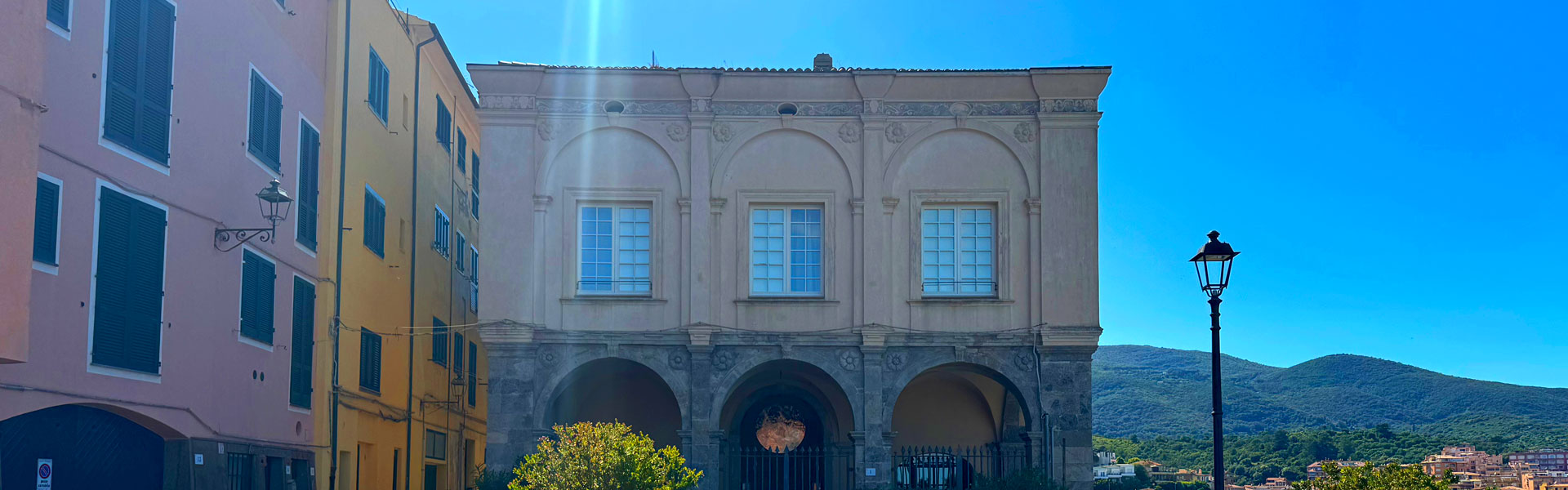
Built by Agostino Chigi and designed by Baldassarre Peruzzi, the Governor's Palace in Porto Ercole is a symbol of the Tuscan Renaissance.
Built in the early 16th century at the behest of the famous Sienese banker Agostino Chigi, known as “the Magnificent” (1466–1520), the Palazzo del Governatore is one of the most significant examples of Renaissance architecture in Porto Ercole. The project was entrusted to Baldassarre Peruzzi, an architect and painter who was one of the leading figures of the Italian Renaissance, known for his ability to blend classical elegance with functionality.
In 1511, the palace gained great prestige when it hosted a visit by Pope Julius II (1503–1513), an event that underscored the strategic and political importance that Porto Ercole was acquiring at that time, both for maritime trade and for coastal control.
However, in 1544, the building suffered a severe attack: it was set ablaze by the feared pirate Barbarossa during the Ottoman raids in the Mediterranean. Despite the damage, the building was restored during the subsequent Spanish rule (1556–1707) and designated as the Governor’s official residence, thus becoming a symbol of political and military authority in the region.
In the 20th century, during World War II, the building was heavily hit by Allied bombing, sustaining extensive structural damage. Fortunately, the original Renaissance façade survived intact; it still retains the elegance of its classical lines and serves as a precious visual reminder of the village’s history.
Today, the Governor’s Palace stands as a tangible testament to the power, resilience, and refinement that have endured through the centuries in Porto Ercole, telling the story of a past marked by Renaissance splendor, conflict, and rebirth.
The Governor's Palace is located within a restricted traffic zone (ZTL), soit is not accessible by carwithout a permit.
The square’s paving ishistoric and slightly uneven, so we recommend wearingcomfortable shoes with good traction, especially for those with mobility issues or poor balance.
The closest place where you canpull over to let passengers outis inPiazza Ricasoli, about100 meters away. From there, you can access the pedestrian zone that leads directly to the building.
To provide the best possible experience, we use technologies such as cookies to store and/or access information on your device. By consenting to these technologies, we may process data such as your browsing behavior or unique identifiers on this site. Failure to consent or withdrawal of consent may adversely affect certain features.

