Close

Home » Explore » Routes and itineraries » Hiking Trails » 20 – From Terrarossa to the Passionist Monastery and back
Starting Point: Terrarossa: The Land That Tells a Story
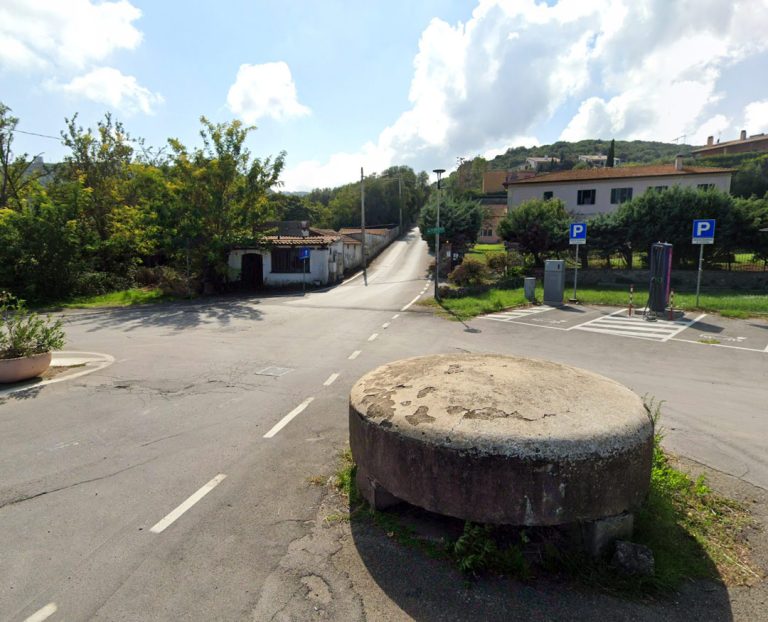
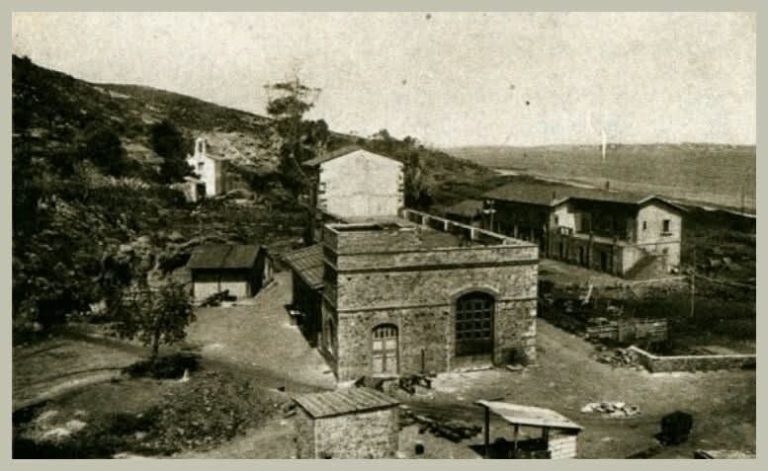
Departure from the square in Terrarossa
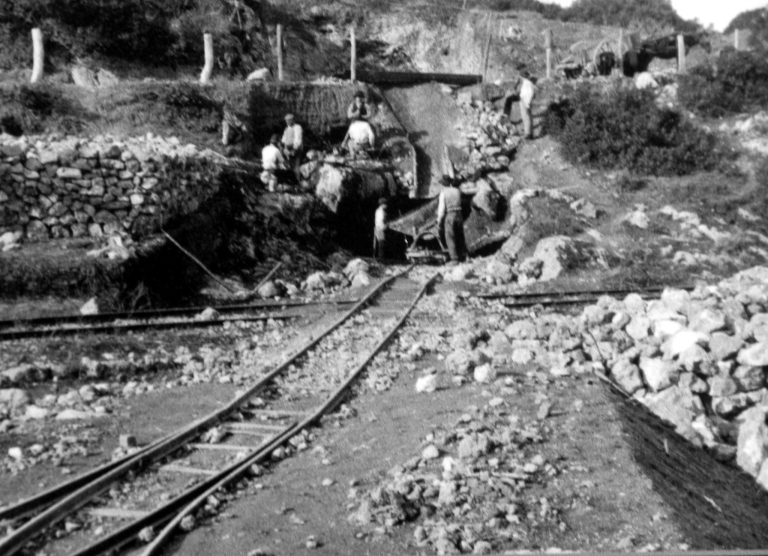
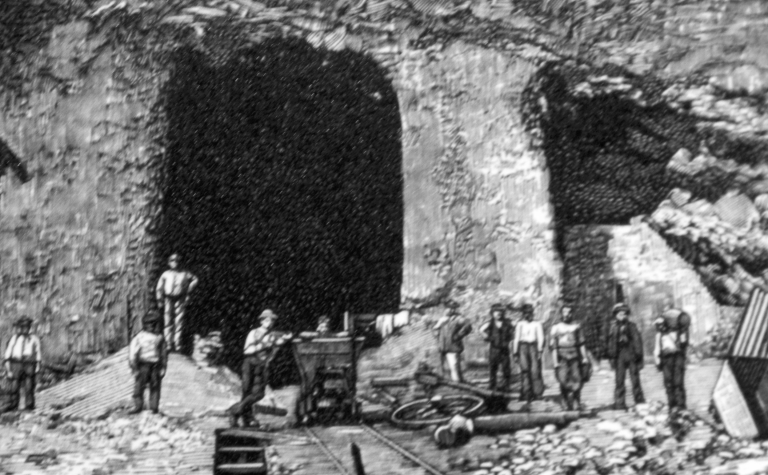
The name of this place is no coincidence. Some of the hills in Terrarossa contained deposits of pyrite, a mineral that emerges from the ground with a reddish hue, and it is precisely from that color that permeates the earth that the town derives its name. But the history of Terrarossa has even deeper roots: on a nearby hill stood the Forte di Terrarossa, a defensive structure built by the French in the early19th century, during the Napoleonic era, at a location where defensive positions of the State of the Garrisons. It had a star-shaped layout, with thick curtain walls and a moat that could be crossed via a drawbridge. No visible traces of it remain today. Then came the railroads. In 1872, Pietro Bausani of Porto Santo Stefano discovered an iron-manganese deposit at the foot of the monte. Mining operations began in 1874 and continued until 1958, with a total estimated production of over 1.2 million tons of ore, which, according to some sources, accounted for 98% of the entire national production of that type of iron-manganese. In 1914 , a narrow-gauge railway spur branching off from the Orbetello–Porto Santo Stefano line was put into service to serve the mines. From that industrial era, so far removed from the tourist imageArgentario , the reinforced concrete towers for the descent into the mining shafts, still visible from Feniglia and the Levante lagoon. The plain in front, once used as a sorting yard for the ore, has become a residential area. It is from here, from this land whose name bears its most ancient history, that our journey toward the convent begins.
The Secret of the Strawberry Tree and Wild Asparagus
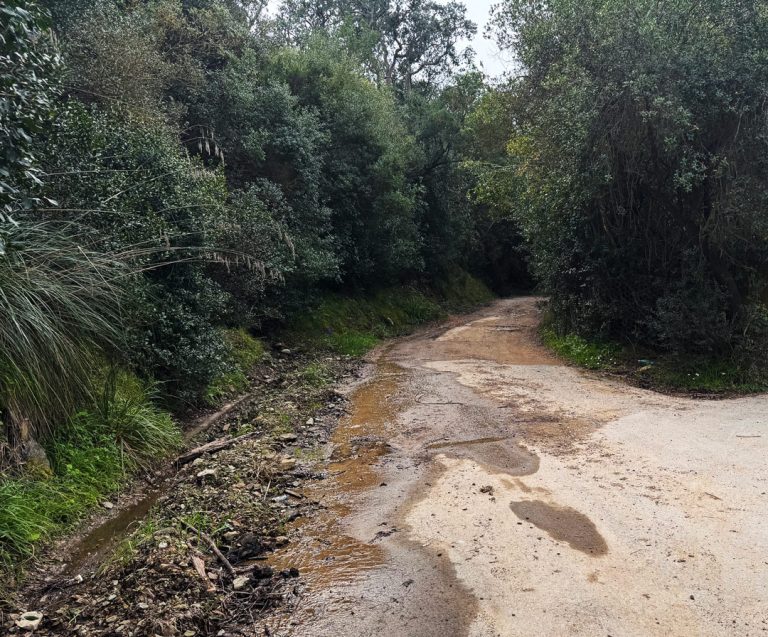
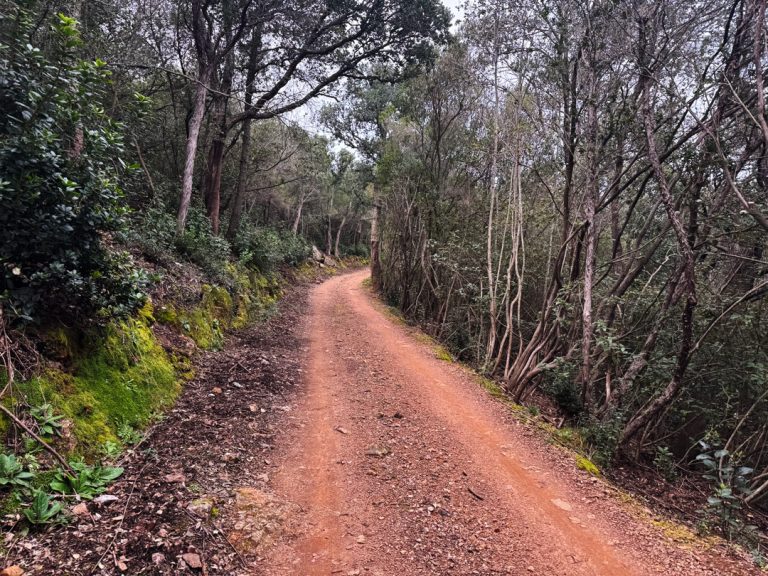
Venturing into the Mediterranean scrub
Along this stretch of the trail, in the fall, one plant immediately catches the eye with a peculiarity unmatched in the Mediterranean flora. The strawberry tree (Arbutus unedo) bears, simultaneously on the same plant, the fiery red fruits of the year that is ending and the white bell-shaped flowers of the year that is about to begin. It is one of the few trees in the world capable of flowering and bearing fruit at the same time, with a ripening cycle that lasts nearly twelve months. For this reason, it has always been called “the tree of the three seasons” in many areas: the green of its evergreen leaves, the white of its flowers, the red of its fruits—the same colors as the Italian tricolor, so much so that the poet Giovanni Pascoli dedicated an ode to it, seeing in a strawberry tree growing on Rome’s Palatine Hill a foreshadowing of the national flag. The Latin name unedo literally means “I eat only one”: a friendly warning, because eating too many can cause some discomfort. In spring, however, those who walk with a keen eye can spot another edible treasure among the thorny bushes: thewild asparagus (Asparagus acutifolius), a plant typical of the Mediterranean scrub that pushes its thin, green shoots—the shoots, smaller than cultivated asparagus but much more flavorful and sought-after. The shoots, with their slightly bitter taste, are used in cooking for omelets, sauces, and risottos, and it has been customary to harvest them in these parts since ancient times. Harvesting in Tuscany is regulated to protect the parent plant, an ancient respect for an equally ancient bounty.
The call of the hoopoe and the scent of fennel
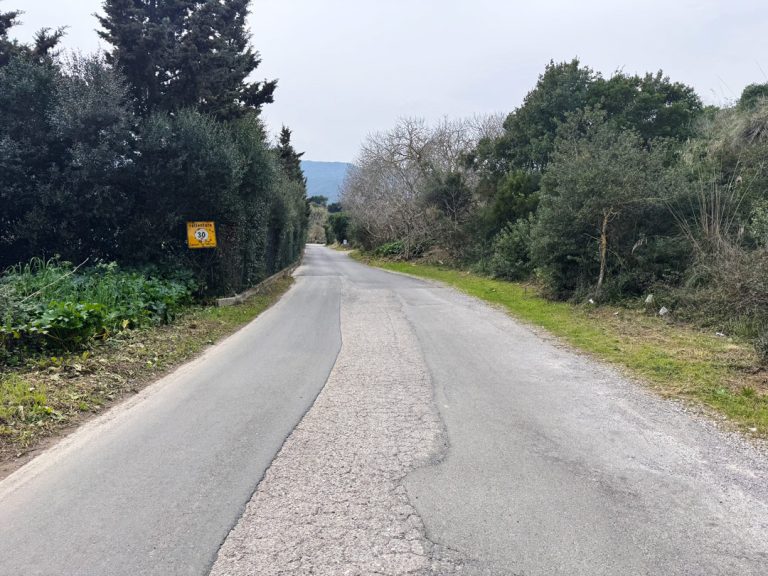
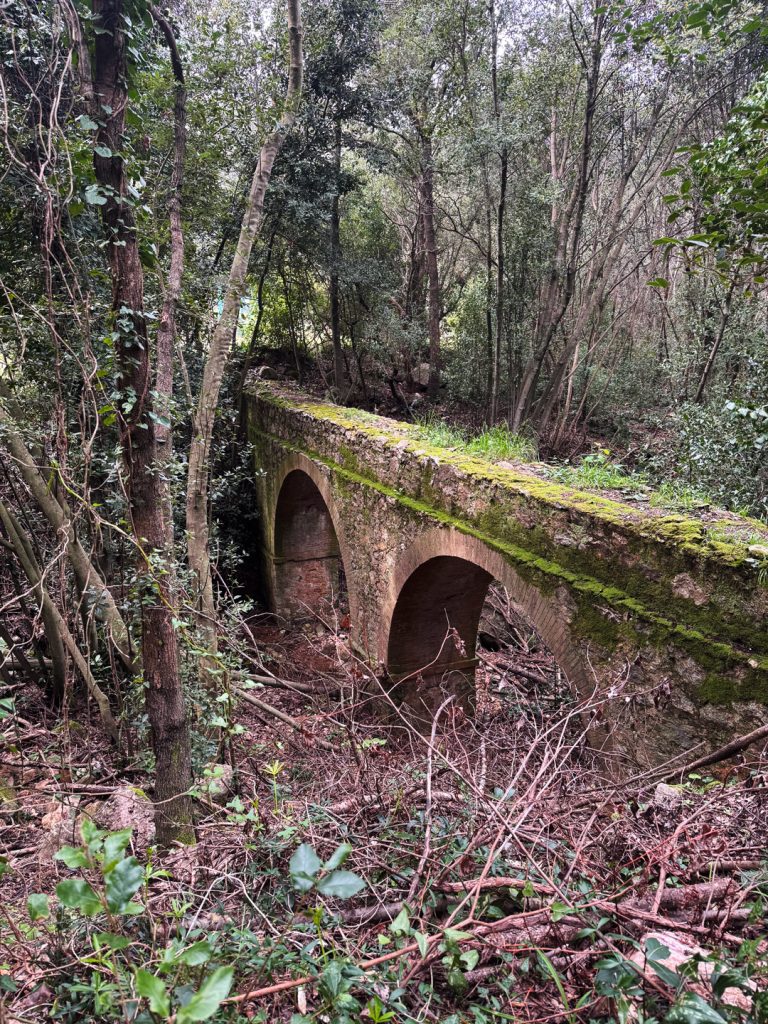
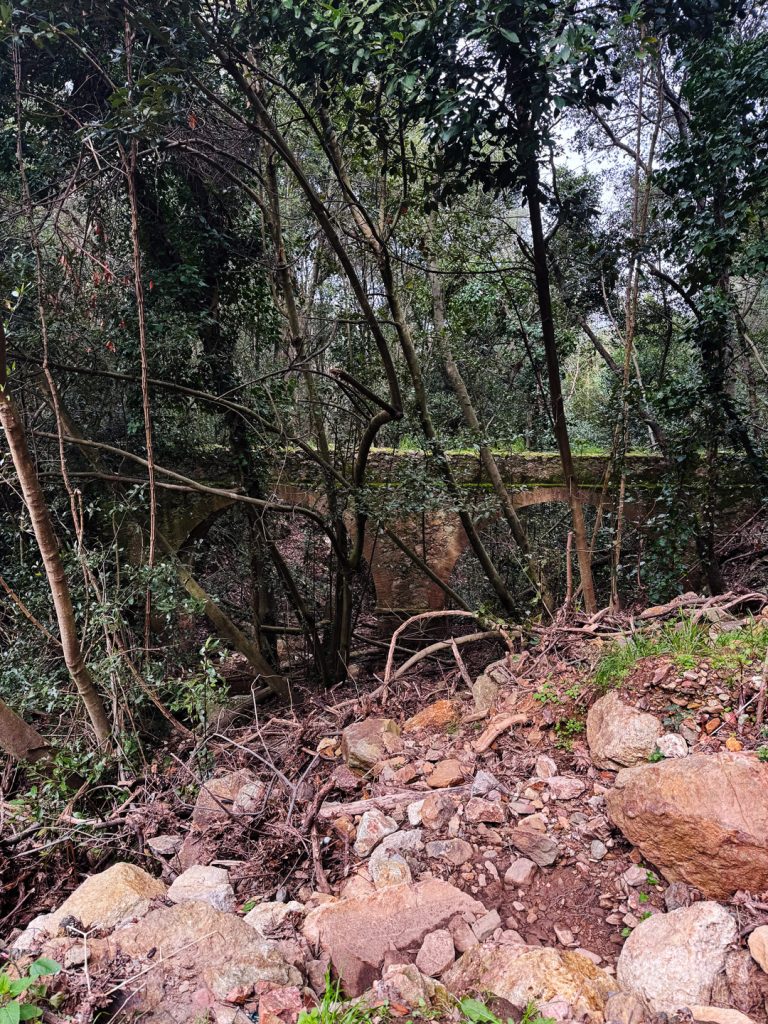
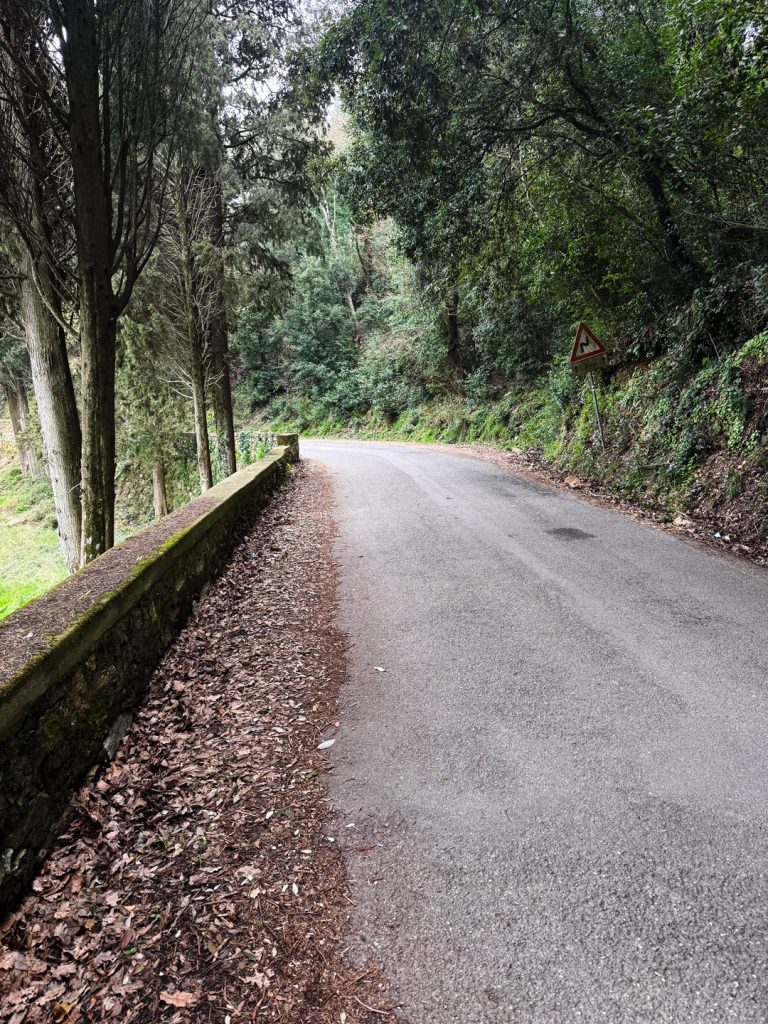
Via Acquedotto Leopoldino, central section
If you’re out walking in the spring or summer and hear a sound that seems to come from far away—a low, repetitive, almost hypnotic “hup-hup-hup” —don’t look for musical instruments or bodies of water: it’sthe hoopoe (Upupa epops), one of the most elegant and recognizable birds in the entire Mediterranean scrubland, and on theArgentario it is right at home. The name itself is onomatopoeic, derived from its call. The male utters it incessantly during the breeding season, fanning out the orange crest with black tips that crowns his head like an Egyptian diadem. Here, where the holm oak (Quercus ilex) begins to close its canopy above us, the green woodpecker breaks the silence of the forest with its high-pitched, chuckling song, like a sudden burst of laughter. But another presence dominates the air in summer: wild fennel (Foeniculum vulgare), which grows luxuriantly along the edges of the path with its tall stems and umbels of small yellow flowers. Its scent—intense, aniseed-like, unmistakable—permeates the warm afternoon air and evokes the flavors of traditional Tuscan cuisine. In Tuscany, wild fennel is used to flavor and perfume finocchiona, the famous regional cured meat that takes its name from this very ingredient. Finocchiona originated in the Middle Ages, in a rural and pragmatic Tuscany where pepper was rare and expensive: butchers used what the land offered—the fragrant, intense seeds of wild fennel—capable of giving the meat a unique character. An aroma so distinct that it gave rise to the Tuscan verb infinocchiare, meaning to deceive—and which today, walking here among these stalks swaying in the wind, seems to return to its most original and innocent meaning.
The tinkling in the night
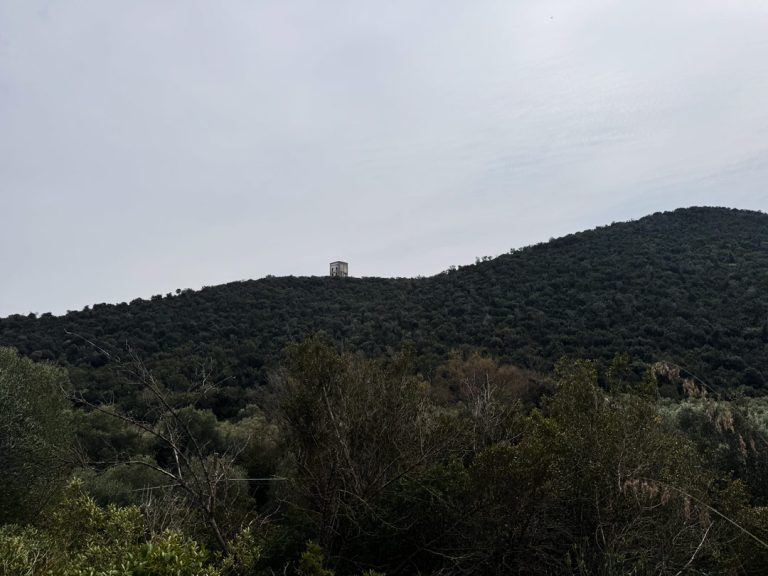
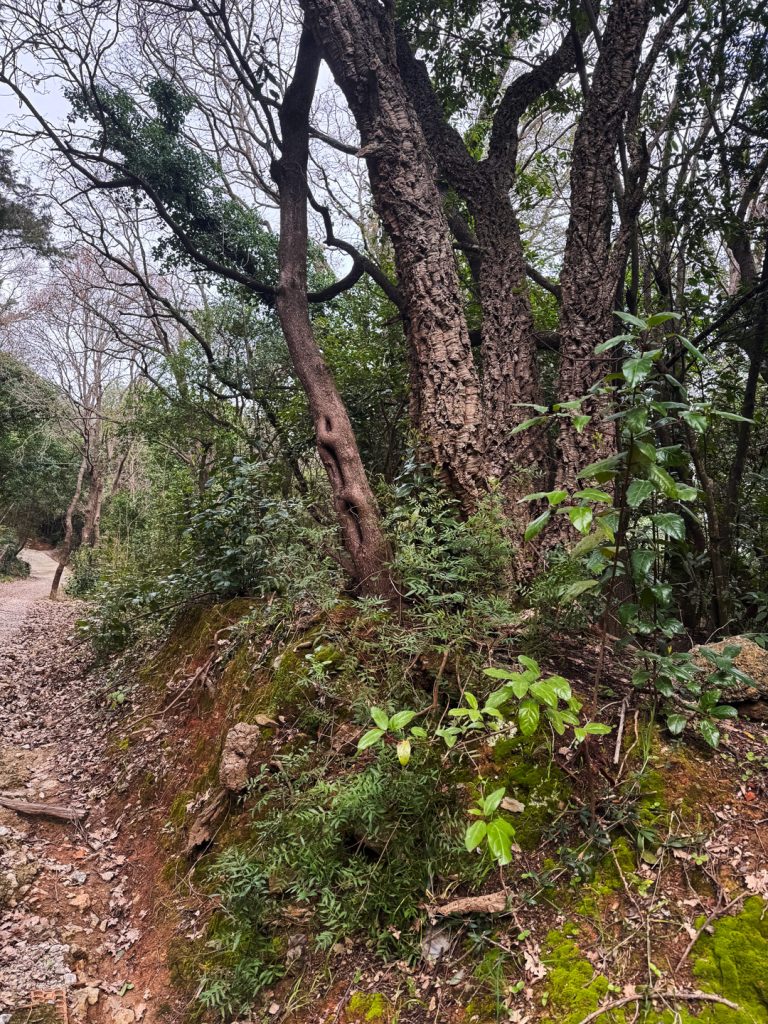
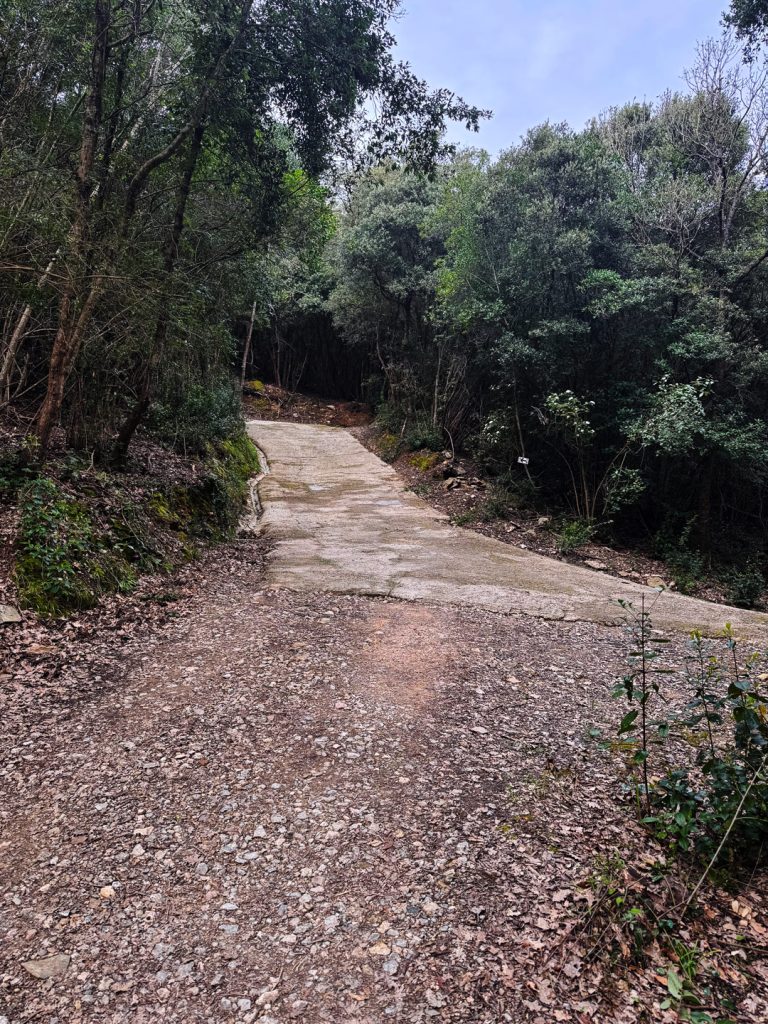
A stretch at high altitude, approaching the Convent
At night, along this stretch of trail, the forest speaks. Not with the rustling of leaves or the chirping of insects, but with a sharp, rhythmic sound, like spines clattering together to produce an unmistakable tinkling: it is theporcupine (Hystrix cristata), Europe’s largest rodent, which inhabits the scrubland of theArgentario and is confirmed as part of the promontory’s permanent fauna. Nocturnal and shy, it slowly roams its territory at night with a wobbly gait that does not seem befitting of an animal capable of defending itself with the quills covering its back and rump—up to thirty centimeters long, with black and white bands. When it feels threatened, it raises them, stamps its feet on the ground, and wags its tail: that distinctive clinking sound is a warning signal that predators soon learn to respect. The porcupine is monogamous, lives in small family groups, and builds its burrows in the rocky crevices of the scrubland. It is almost never seen during the day, but along the trail one may come across its fallen quills—striped with black and white—like silent calling cards left behind in the night. In this part of the forest, as you ascend, the vegetation grows denser: the myrtle permeates the air with its resinous scent, and the broom color the open clearings yellow in spring.
The silence he had been waiting for
Arrival at the Passionist Convent
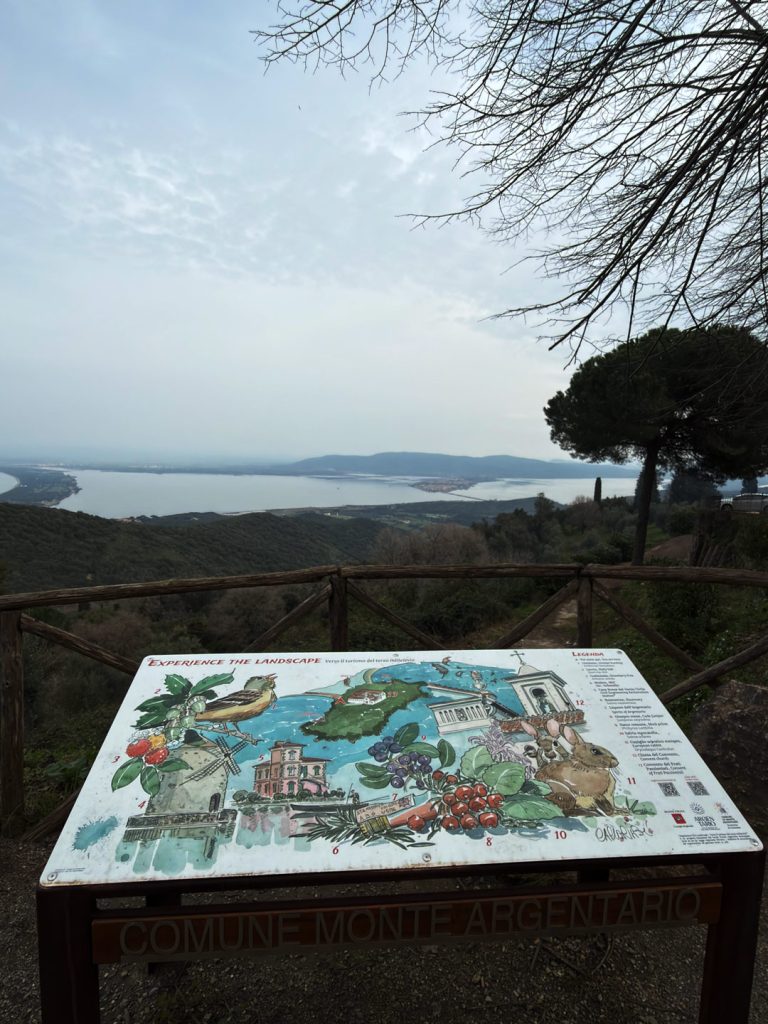
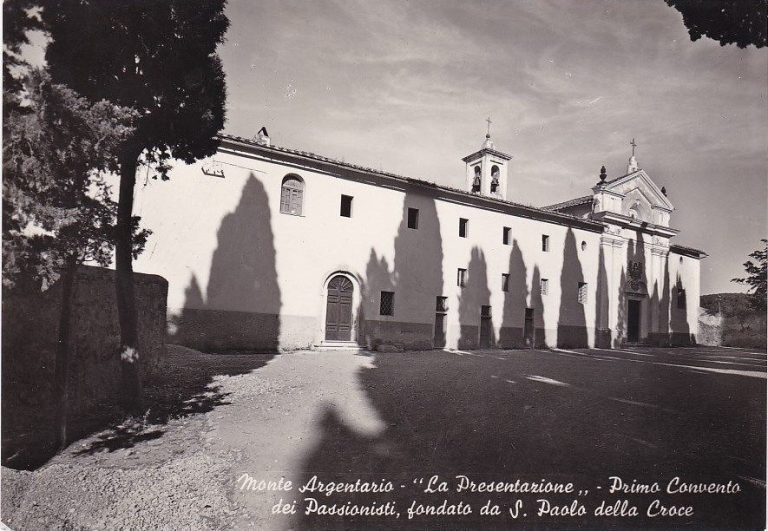
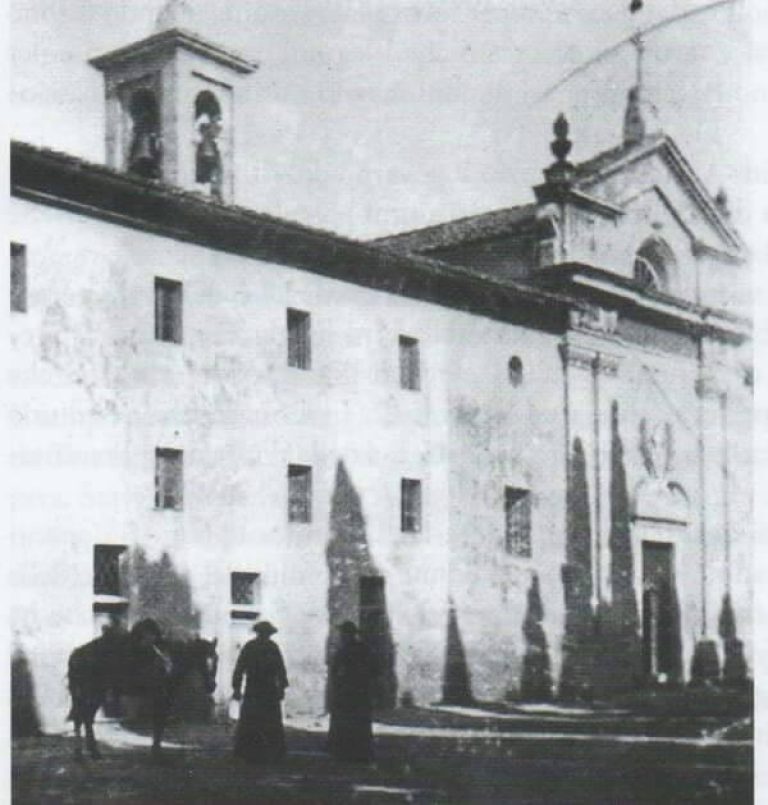
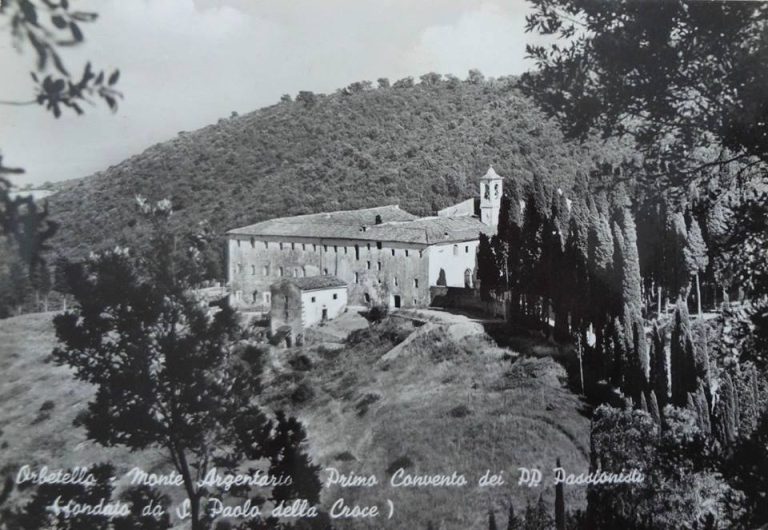
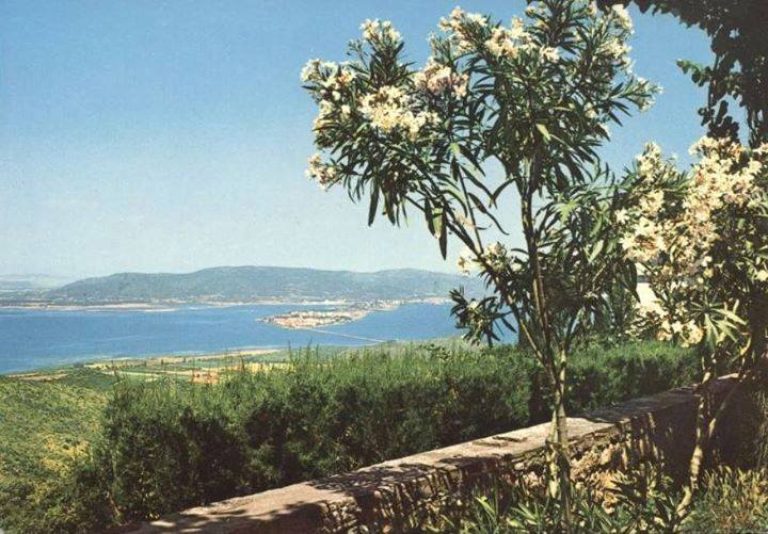
We arrive at the Passionist Convent after crossing almost the entire width of the promontory, from east to west. The silence here has a different quality than that of the forest: it is a silence that is not an absence of sound, but a presence. The wind carries, on one side, the scent of the Tyrrhenian Sea, and on the other, the distant glimmer of the Orbetello Lagoon, visible from up here in its entirety, with the sandbars separating it from the open sea. It is the same view that St. Paul of the Cross beheld when he chose this place to found, in 1737, the first Passionist retreat: a solitude not empty, but inhabited by light and the landscape. Among the bushes around the convent, the wild rabbit roam their usual paths, indifferent to the passing centuries—tiny creatures that have shared this corner of the promontory with the friars for nearly three centuries. The friars also guard a more fragrant secret: theAmaro Argentarium, created from an ancient recipe of the Passionist Fathers, is available for purchase only here, in a small shop within the monastery. The shop also sells religious items and publications inspired by the congregation — but it is the herbal liqueur, with the name of the promontory engraved on its label, that remains the most authentic souvenir one can take back down to the valley. On hot summer days, the monastery and its surroundings also become a place much loved by the residentsArgentario: it is here that the locals come to breathe the fresh air of the woods, seek coolness, and find silence far from the heat of the coast. A quiet and popular tradition that has stood alongside the religious one for generations. The Owl, at night, calls from somewhere within the walls. And the forest we crossed, seen from up here, stretches eastward like a continuous green blanket—the Mediterranean scrubArgentario, silent and ancient, which has witnessed everything and continues to grow.
To provide the best possible experience, we use technologies such as cookies to store and/or access information on your device. By consenting to these technologies, we may process data such as your browsing behavior or unique identifiers on this site. Failure to consent or withdrawal of consent may adversely affect certain features.