
Close
Home » Explore » Experiences to enjoy » The Coastal Towers » Capo d’Uomo Tower
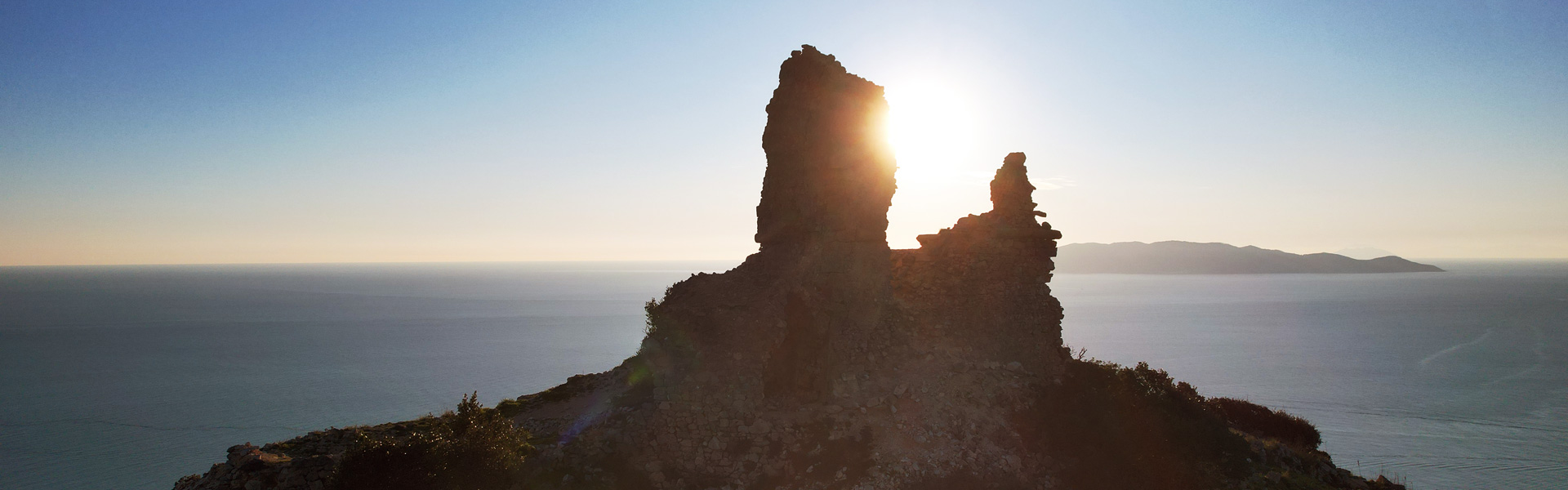
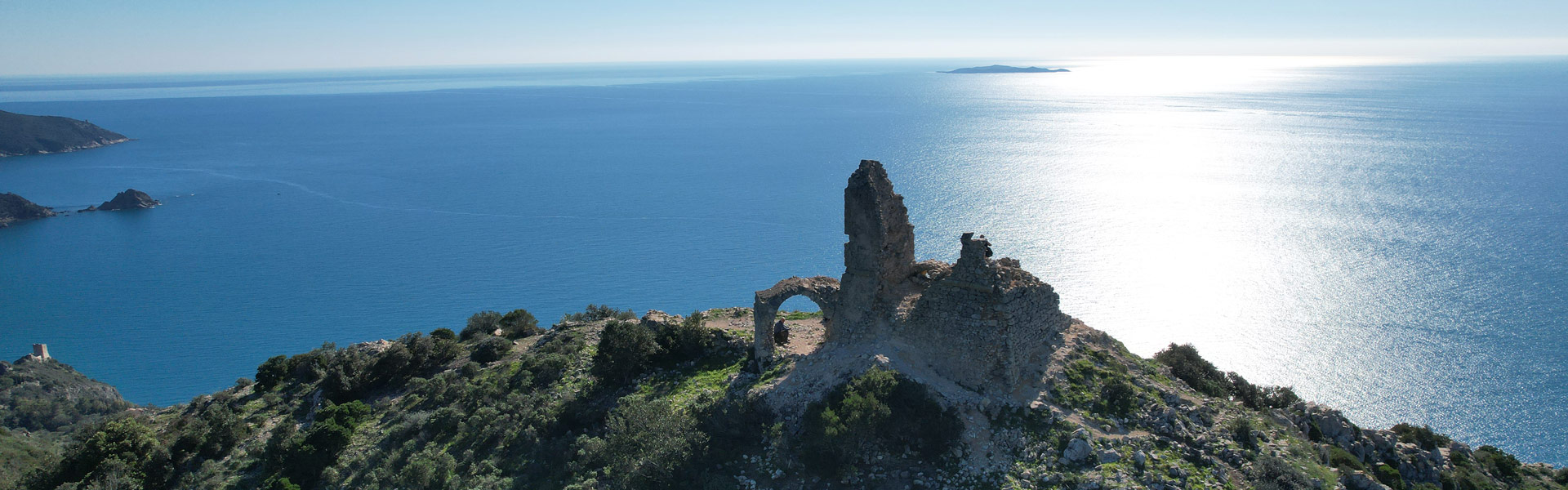
Located at an elevation of 358 meters, the Capo d’Omo Tower played a crucial role in monitoring the sea, marking the border between the Monte Argentario andthe Island of Giglio.
A square tower of uncertain date, but likely of medieval origin.
Located at an elevation of 358 meters above sea level, it was able to overlook the wide stretch of sea that separates the Monte Argentariofrom the Island of Giglio, and although its function was limitedto sighting and signaling, it was of considerable importance because, given its height, the first signals were sent from there to the coastal towns of the Maremma and later, after the establishment of the State of the Presidi, to the neighboring towers.
Its location in a remote, hard-to-reach area and its particular exposureto the elements have caused this ancient structure to deteriorate rapidly.
In the mid-18th century, it was temporarily demilitarized, only to be reactivated in the early1800s, during the rule of Napoleonic France, with a garrison of four soldiers.
It was abandoned again during the subsequent Grand Ducal period and has been in ruins ever since.
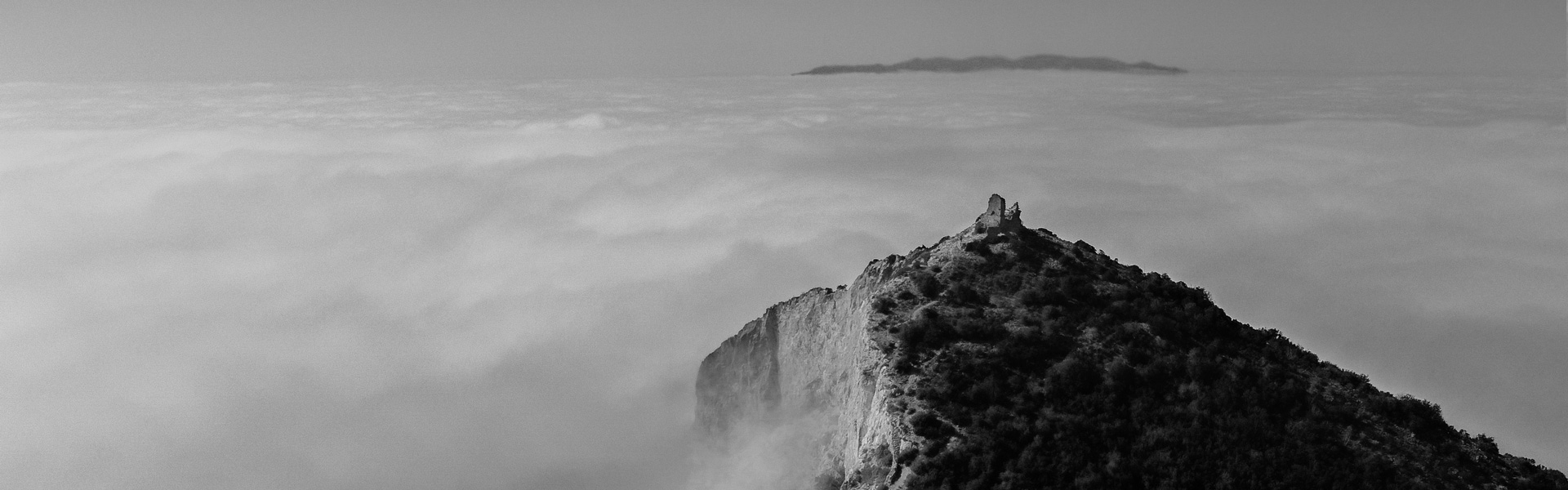
The name Capo d’Omo—sometimes spelled Capo dell’Uomo or even Cavo de Homo—derives from the promontory on which the structure stands, whose outline resembles that of a human head.
Location: φ = 42° 23’ 45” N – λ = 11° 06’ 13” E.
Directions: The Capo d’Uomo Tower is clearly visible from the Porto S. Stefano Panoramic Road, but to reach it, you must follow that road to kilometer 7; at the fork, turn right and continue for another 900 meters, then take the dirt road on the right. After about 350 meters, pass a field on the left and climb for about 500 meters toward the tower. The effort to reach the site will be well rewarded by the stunning panoramic view of the Canale del Giglio.
The Capo d’Uomo Tower stands atop a cliff on the western side of The Argentario promontory, between Porto Santo Stefano and Porto Ercole. To reach it, take the scenic Argentario Panoramic Road to a small clearing near a pass. You can park your car here, although there are no official signs or designated parking areas.
From this point, a pedestrian-only trail begins, winding along a ridge surrounded by Mediterranean scrub. The trail features uphill sections with a gravelly, rocky surface, including some exposed areas without guardrails. There are no ramps, handrails, or alternative routes: the tower is accessible only on foot, and the trail is not suitable for those using wheelchairs, strollers, or mobility aids.
This hike requires good physical stamina and sure-footedness. It is important to wear hiking boots or shoes with non-slip soles, bring water, and set out during the cooler hours of the day. The trail can be challenging for those with even mild mobility issues, so it is advisable to have someone accompany you. Additionally, those who suffer from vertigo may find some sections difficult, given the proximity to the cliff’s edge.
Despite the challenges, the hike is an integral part of the experience, and the view that unfolds once you reach the tower is truly extraordinary, offering an unobstructed vista of the sea, the islands of the Tuscan Archipelago, and The Argentario coastline. It’s a place that more than makes up for the effort required to get there.
To provide the best possible experience, we use technologies such as cookies to store and/or access information on your device. By consenting to these technologies, we may process data such as your browsing behavior or unique identifiers on this site. Failure to consent or withdrawal of consent may adversely affect certain features.

