Close

Home » Explore » Routes and itineraries » Hiking Trails » 18 – From the road by the Porto Ercole Cemetery to the Passionist Convent and back
Starting point: The Porto Ercole Cemetery: where a genius rests
Departure from the Porto Ercole Cemetery
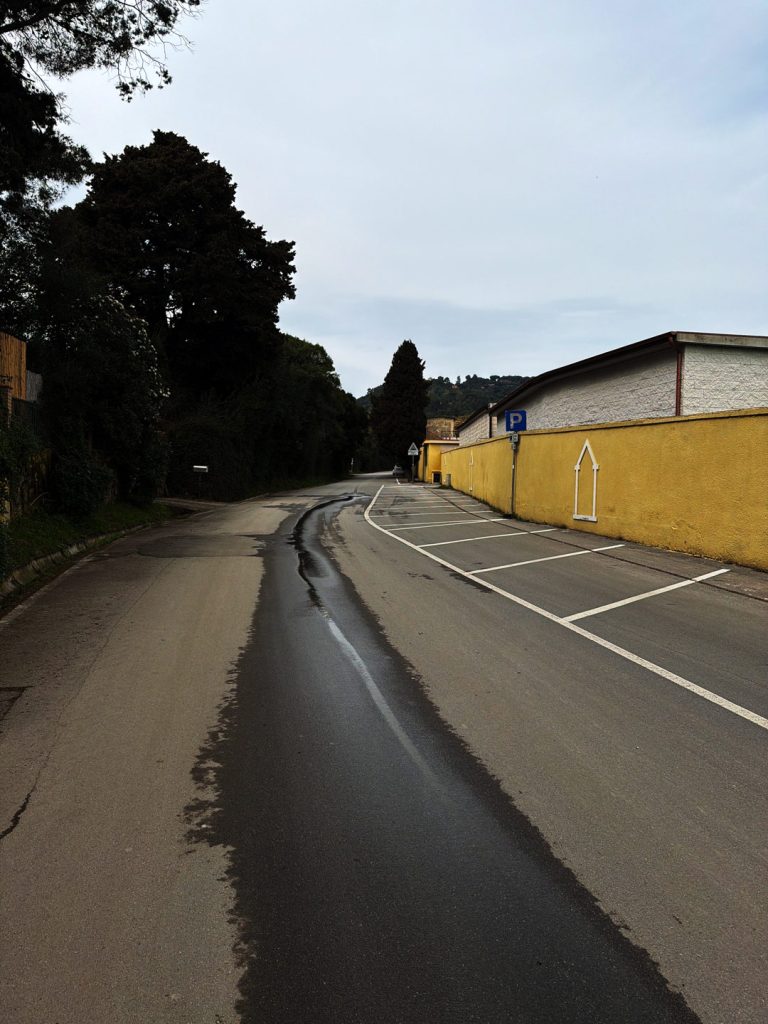
We’ll start in front of the Porto Ercole cemetery, a site that has been home to 2019 the presumed remains of Michelangelo Merisi da Caravaggio, who died here on July 18, 1610 at the age of 39. The painter, fleeing a death sentence, had been admitted to the hospital of Maria Ausiliatrice, run by the Confraternity of Santa Croce, but he did not survive. Porto Ercole has ancient origins: Etruscans and Romans settled here before the Greeks. There are two theories regarding the name itself: one from the Phocaean Phaeacians, who found a bay resembling their homeland and dedicated it to Hercules, and the Etruscan one, linked to a necropolis in the area of Cala Galera , which corresponds in the Etruscan astral calendar to the constellation of Hercules.
Via Tramontana and the Fosso di Boccadoro: heading inland
Via Tramontana
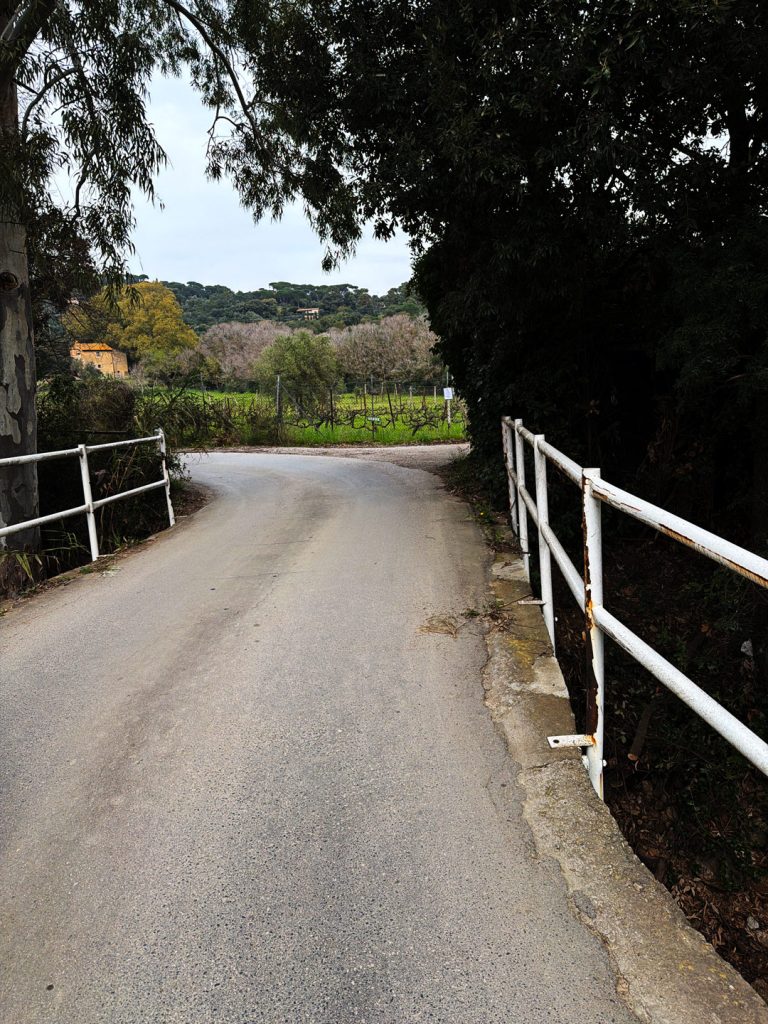
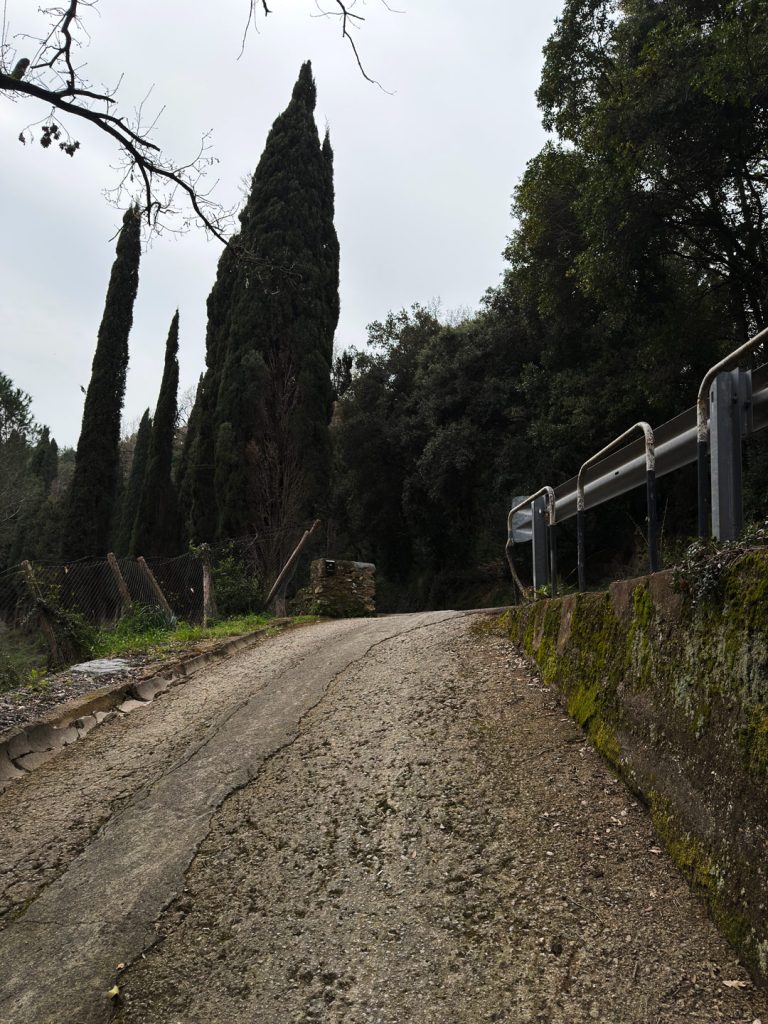
We head up Via Tramontana and cross the Fosso di Boccadoro, an ancient place name of uncertain origin. This road reminds us that Porto Ercole was an important trading port for centuries. In the early 16th century, the Sienese banker Agostino Chigi rented the village, commissioning the great architect Baldassarre Peruzzi to design the Governor’s Palace. However, this prosperity came to an end in 1544, when the Ottoman corsair Barbarossa sacked the town, destroyed the structures commissioned by Chigi, and took numerous prisoners.
The entrance to the woods: where the paved road ends
Transition from the paved road to the trail
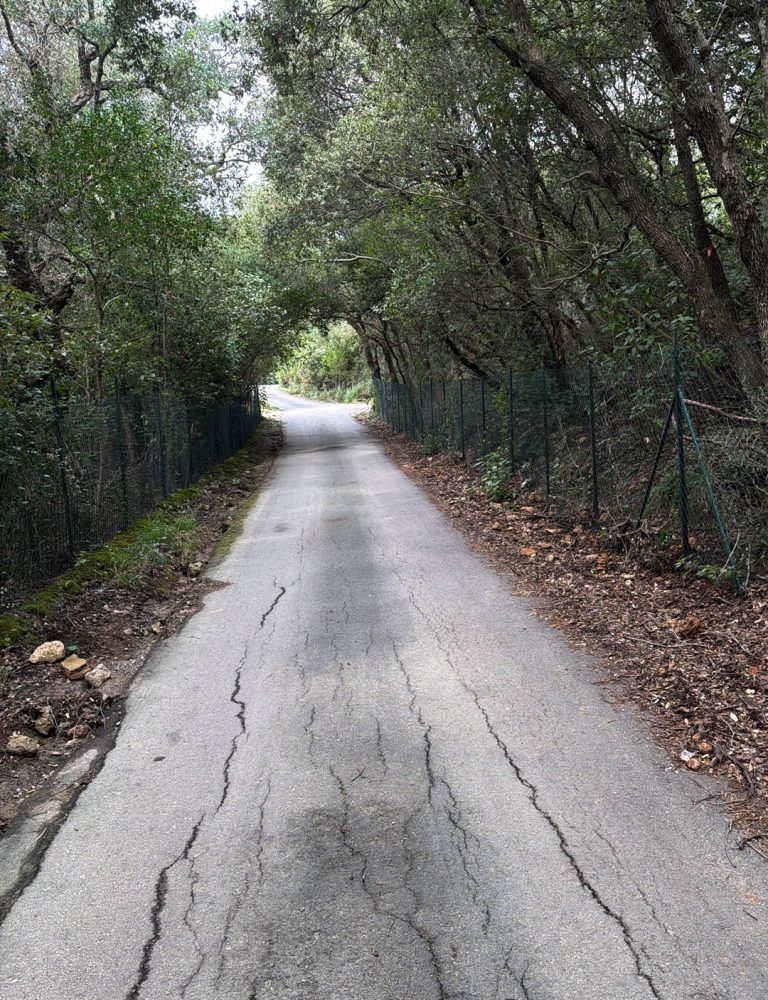
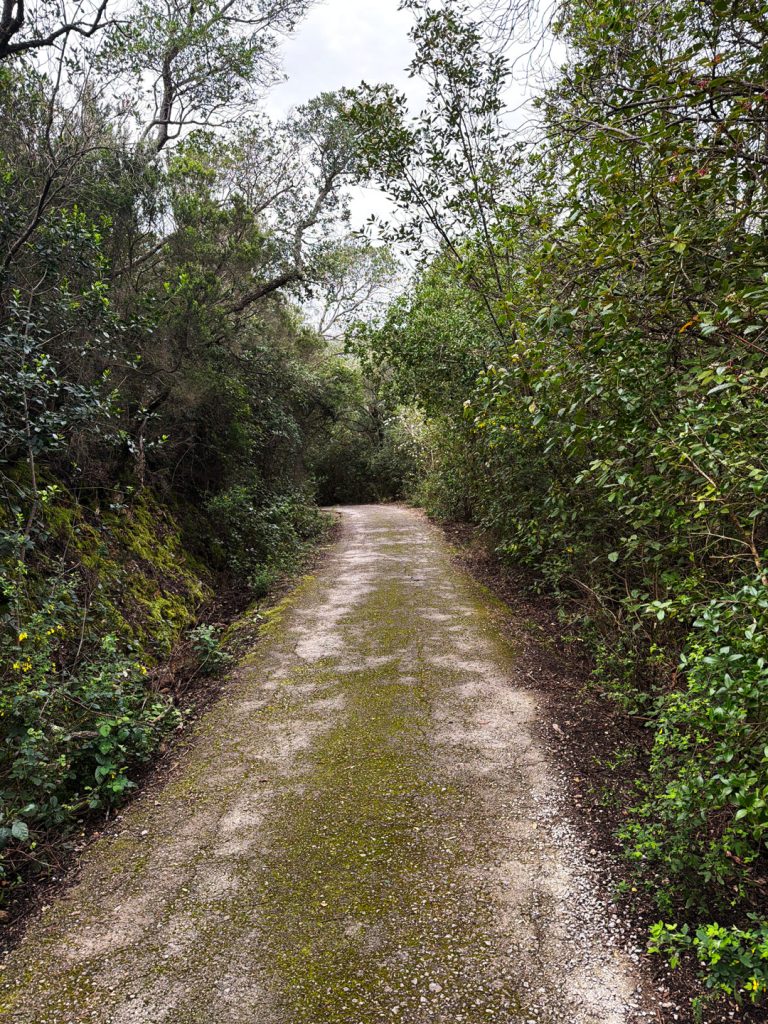
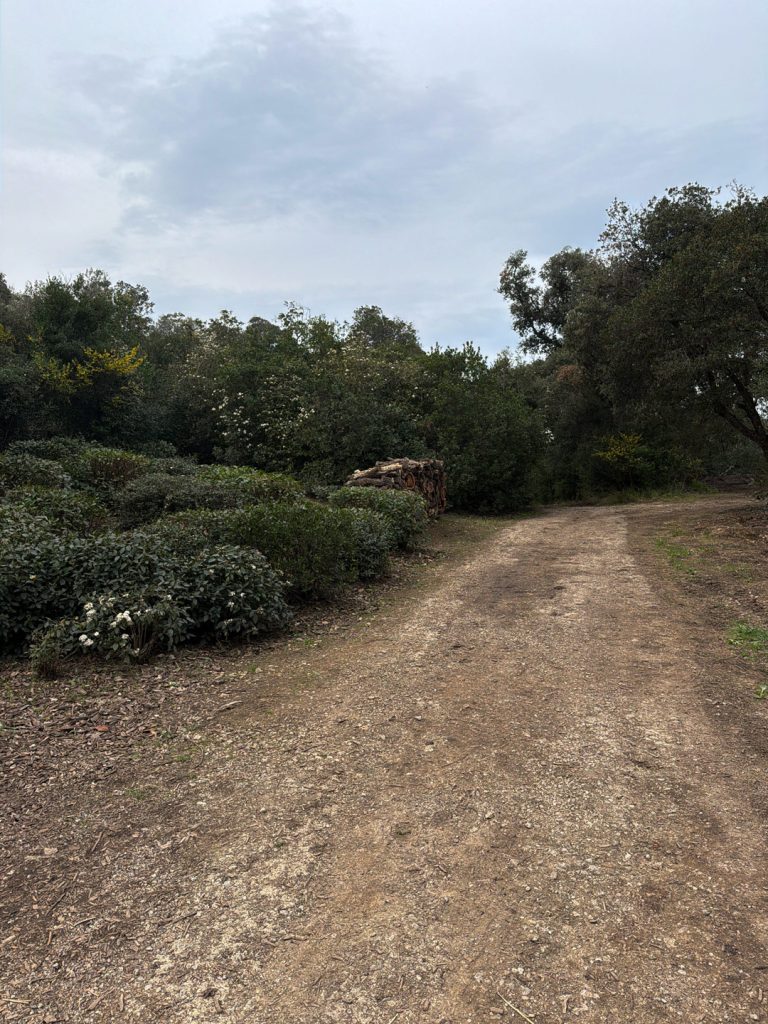
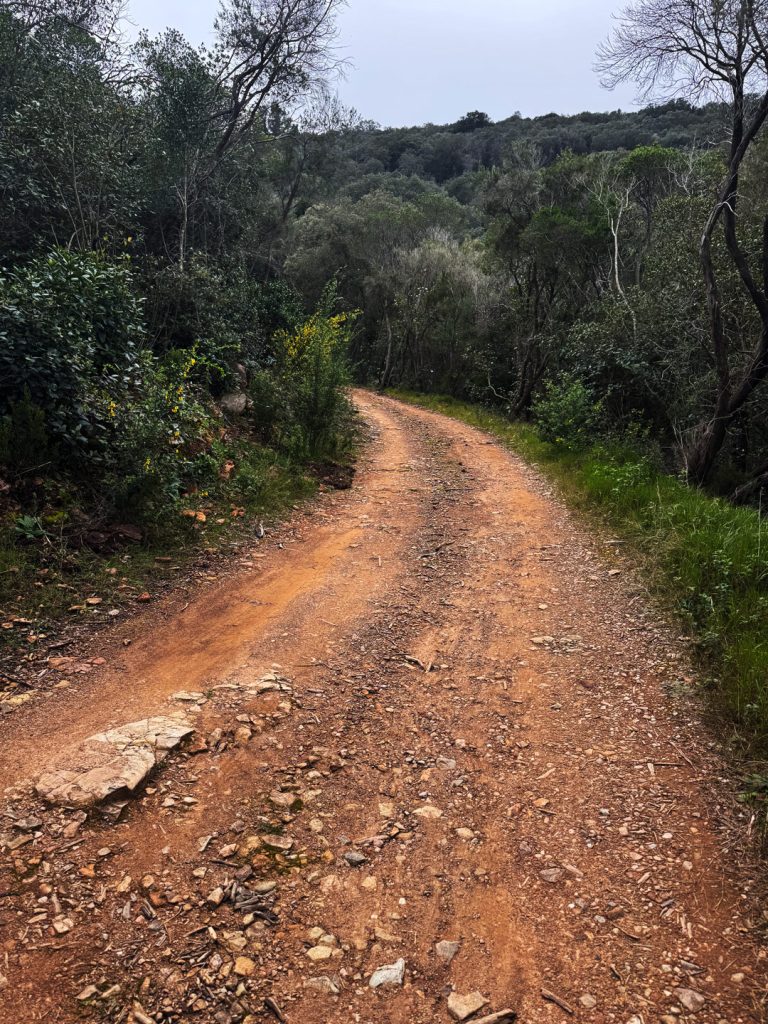
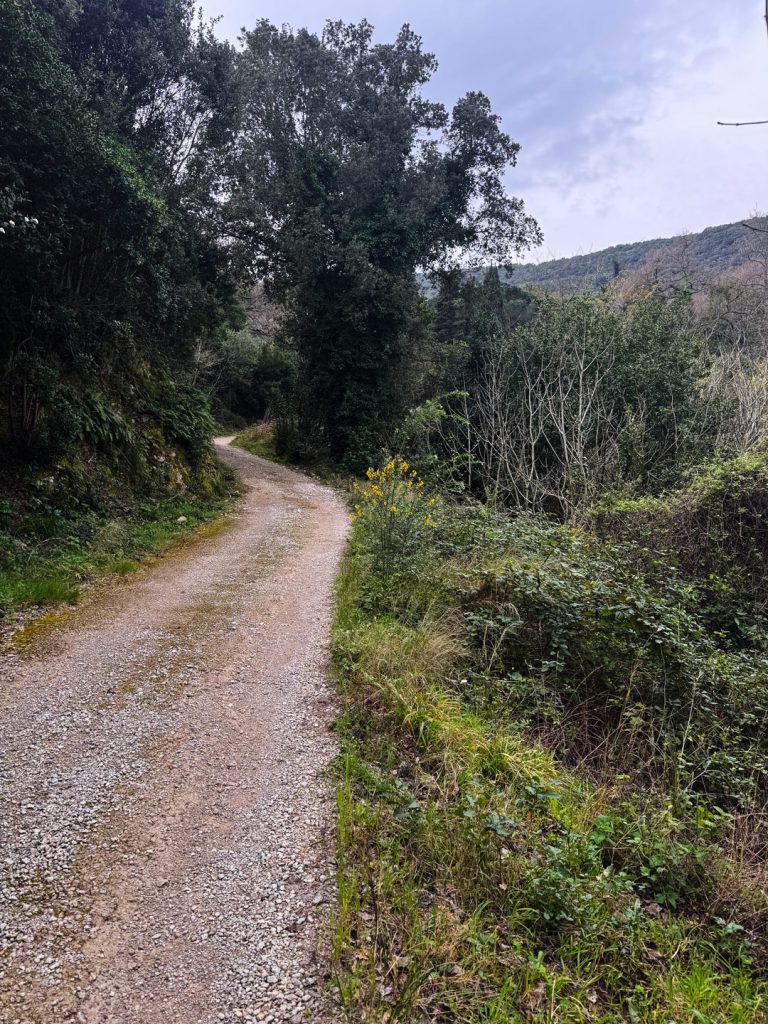
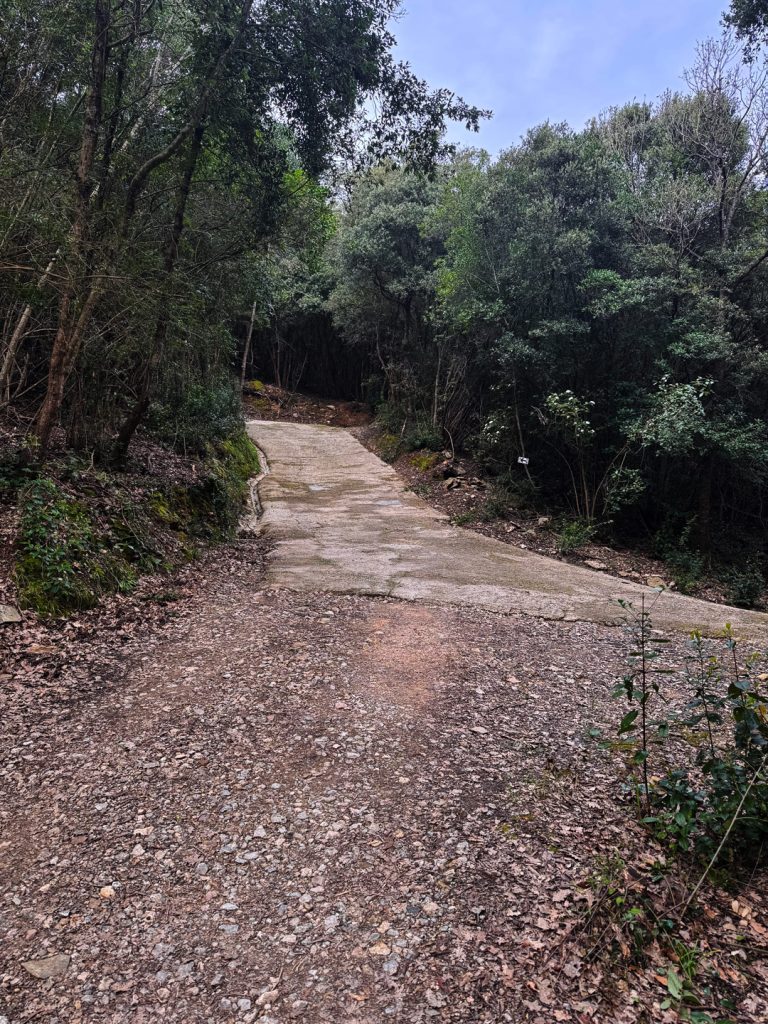
After about 1.5 km of paved uphill road and a short concrete section, the trail turns into a dirt path and winds through the Mediterranean scrub. We are in the heart of The Argentario typical vegetation: holm oaks, cork oaks, arbutus, myrtles, mastic trees and broom alternate in a dense, fragrant landscape. Those who walk in silence may spot deer, foxes and wild boars, which are common sights in this forest. During rainy periods, you can see large puddles where the wild boars have fun.
The Leopoldino Aqueduct Trail: A Walk Through the History of Water
Aqueduct Trail
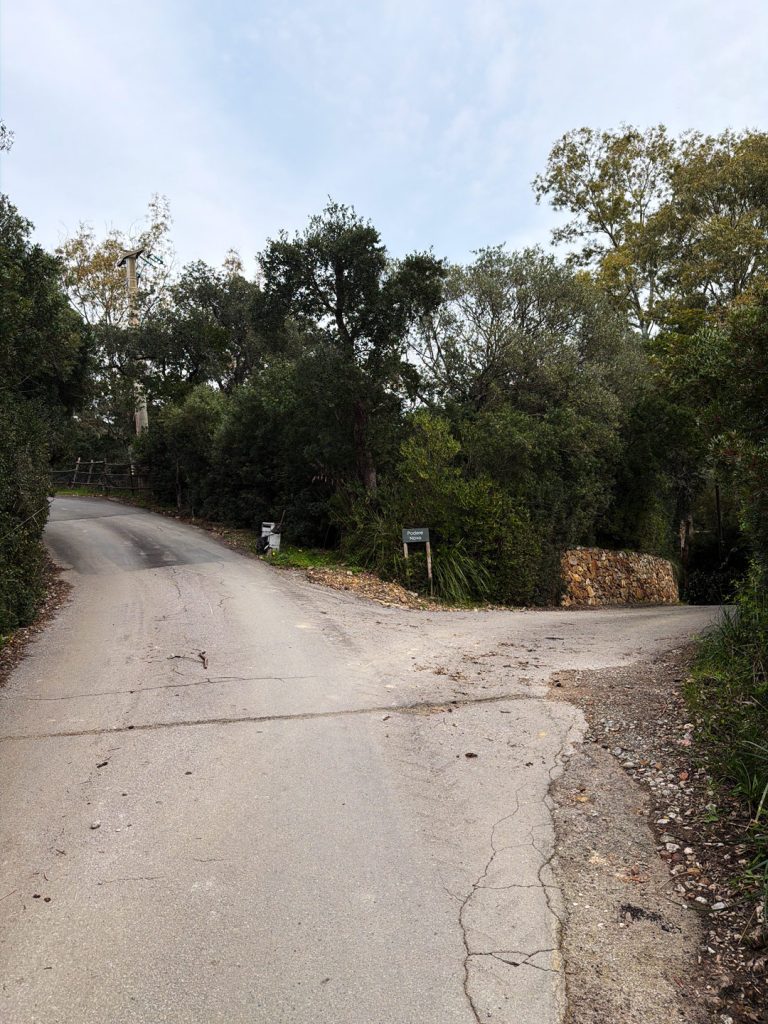
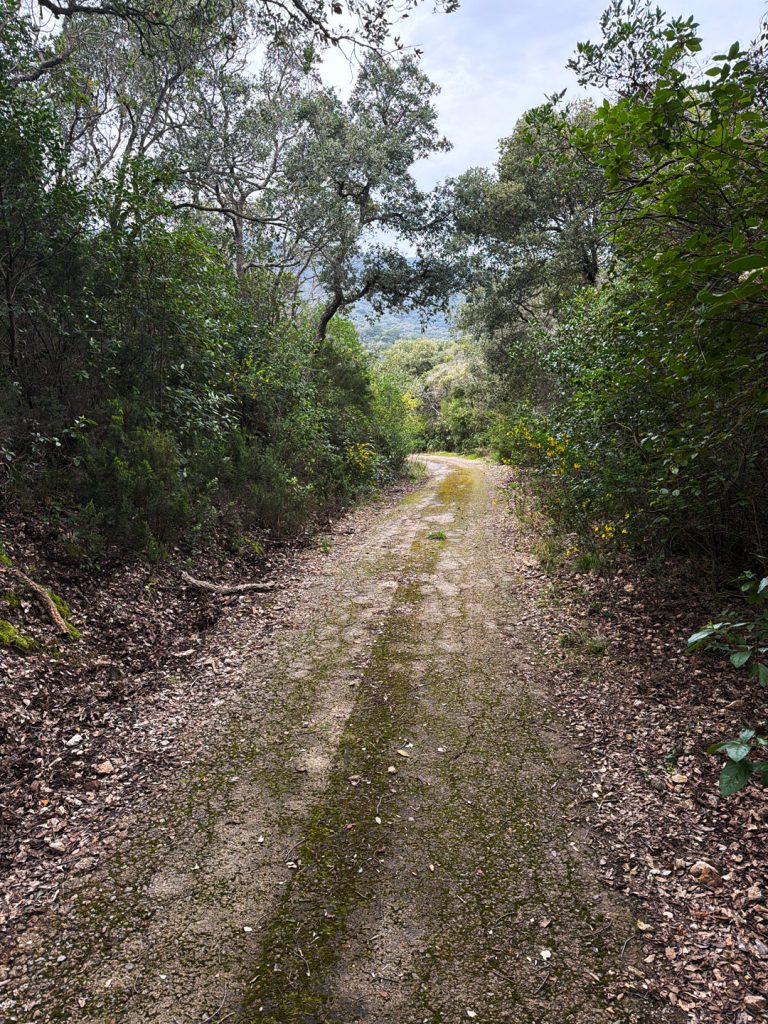
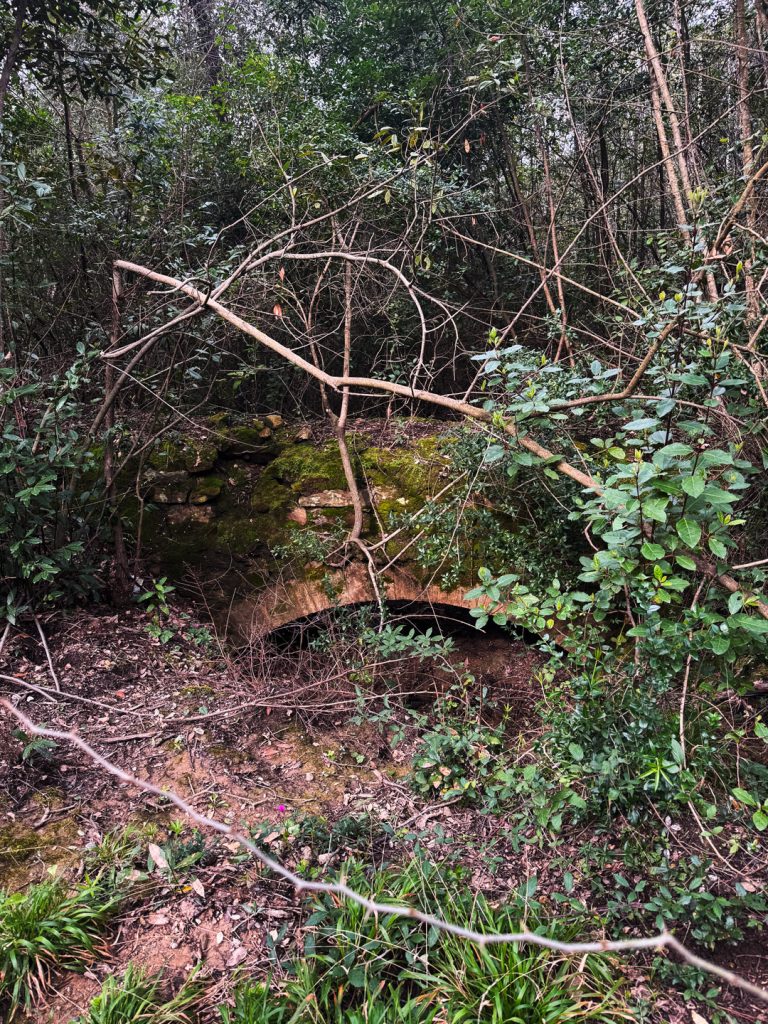
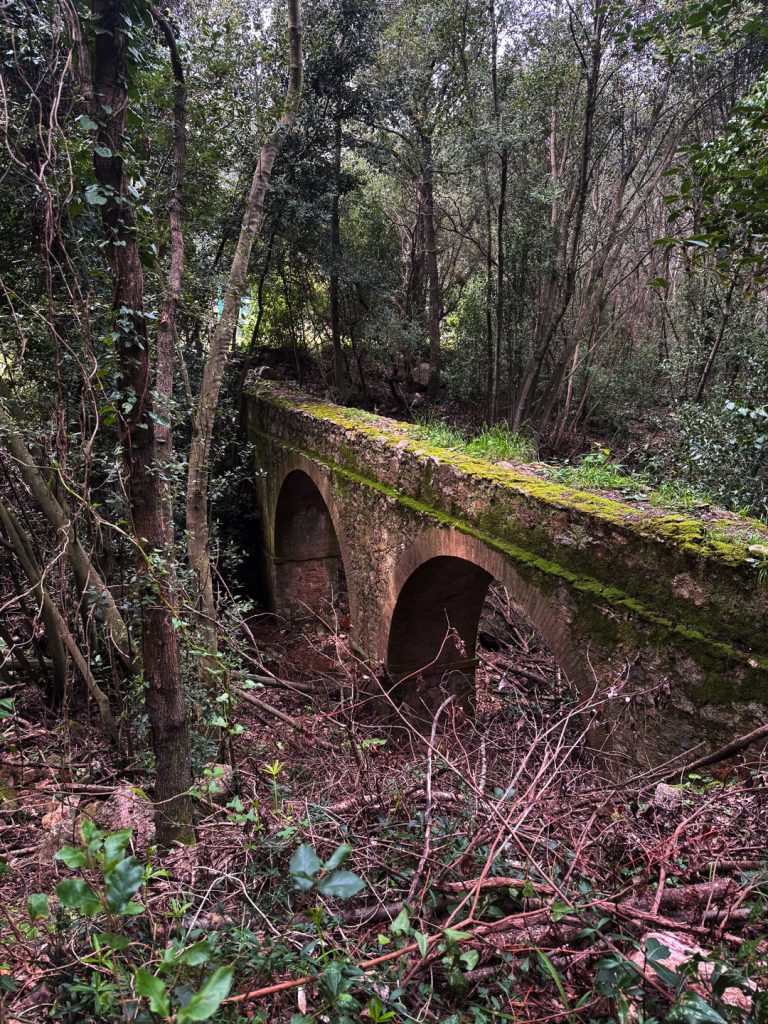
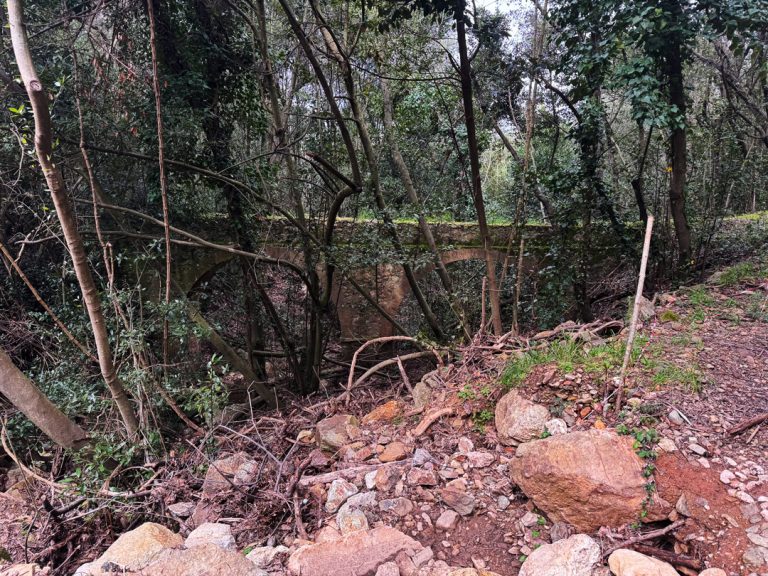
After about 2.3 km, we take the left fork and turn onto Via dell’Acquedotto Leopoldino, a historic dirt road along which the remains of a 19th-century aqueduct that supplied Porto Ercole by drawing water from monte springs. Low stone walls and square-cut conduits emerge from the vegetation, especially where the path crosses ditches. Walking along this road means following the same path as the water that quenched the village’s thirst for decades.
The Long Traverse: The Forest Suspended Between Two Seas
Continuing uphill on Via dell’Acquedotto
This is the longest and wildest stretch of the route. We walk along the hillside between the eastern slope, which faces Porto Ercole and the Tyrrhenian Sea, and the western slope, which opens onto the Orbetello Lagoon.Argentario originally an island: over the centuries, the combined action of ocean currents and the Albegna has created the two sandbars of the Feniglia and Giannella, connecting the promontory to the coast and forming the lagoon. It was precisely on these lands that in 1555 the capitulation of Siena to the Spanish and Medici troops took place, immortalized by Vasari in the Sala dei Cinquecento at Palazzo Vecchio.
The Convent Provincial Road: the viewpoint overlooking the lagoon
The entrance to the Provincial Road of the Convent
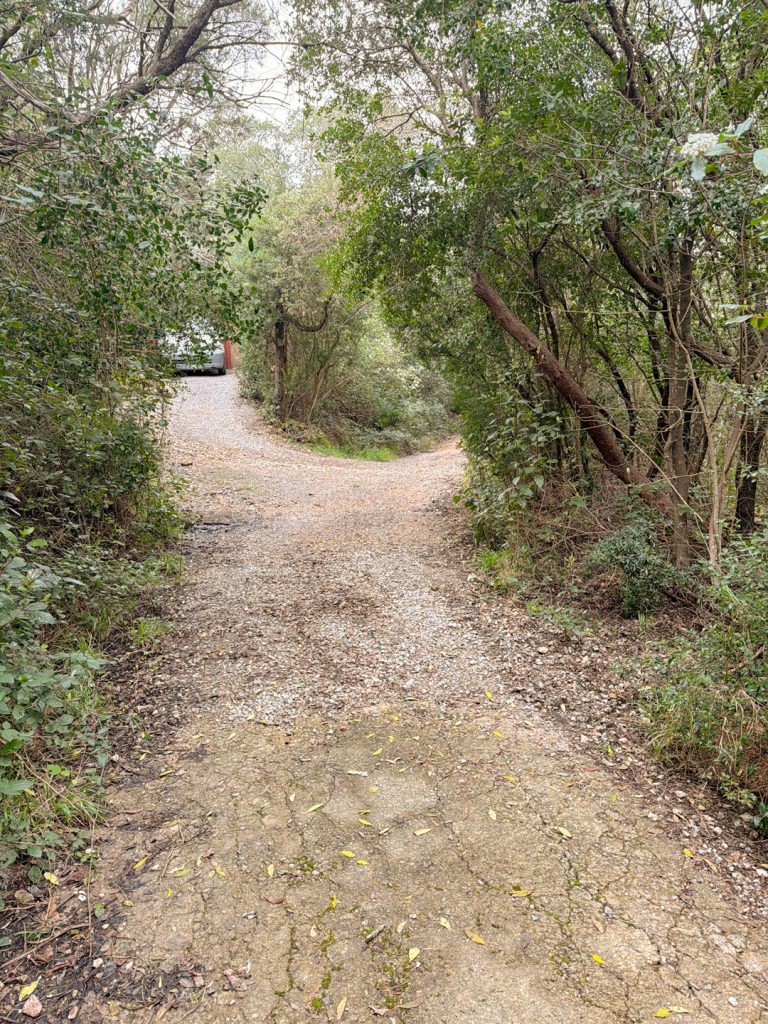
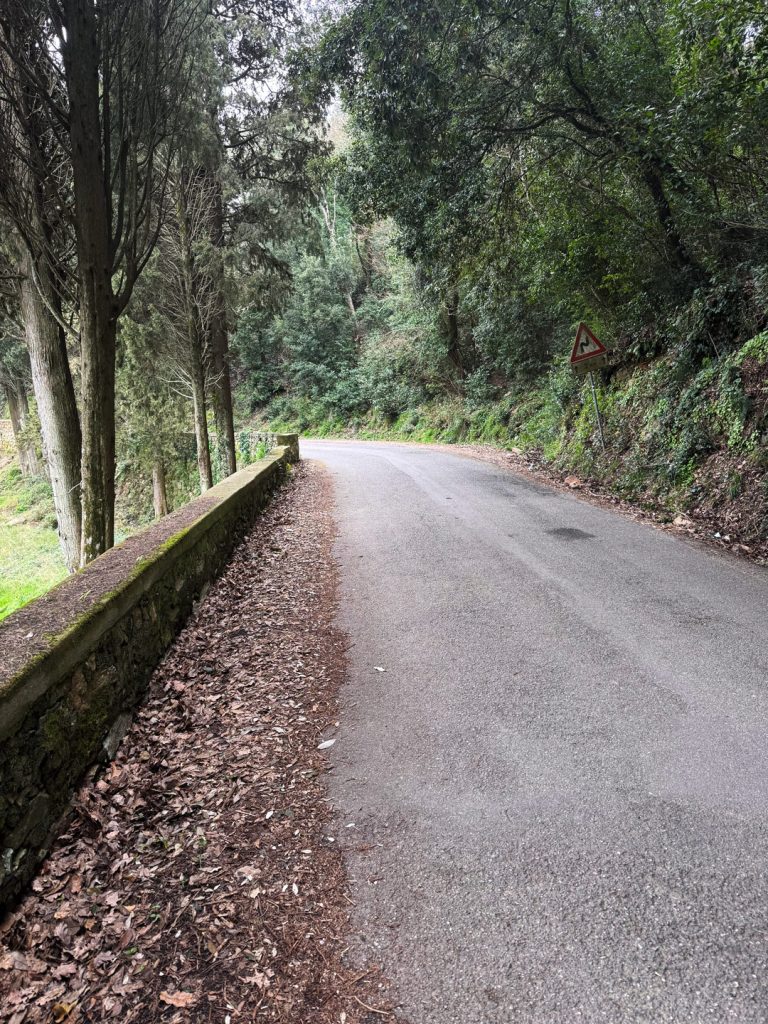
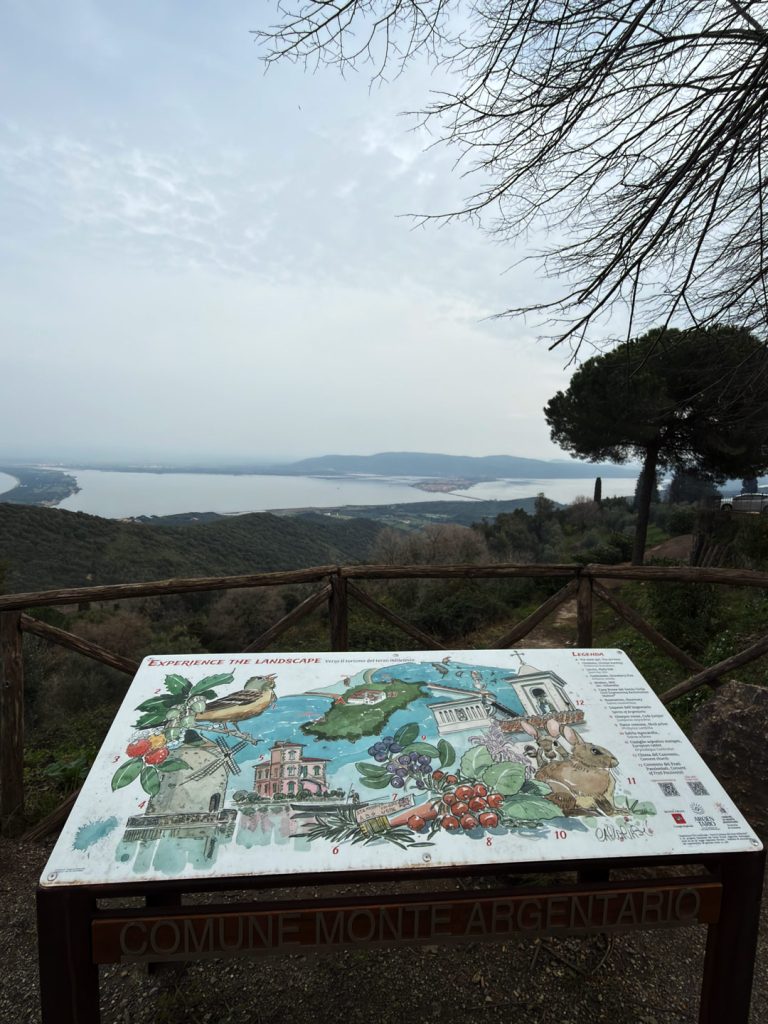
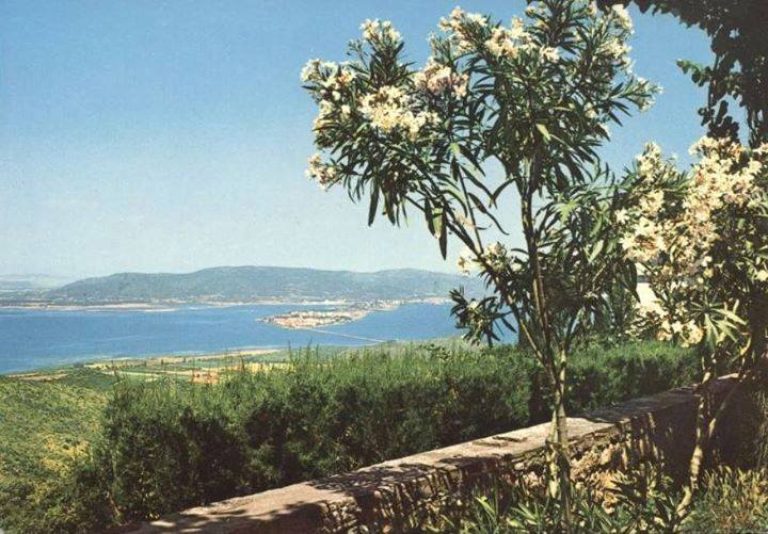
After the final climb, which is particularly steep over the last 250 meters, we emerge onto the paved provincial road with the convent already in sight. From here, the view opens up onto the Orbetello Lagoon, now a WWF Oasis, a refuge for flamingos, herons and cormorants. It was from a similar vantage point that in 1722 Paolo Danei, on his way to Rome, stopped to contemplate the Monte Argentario and felt called to found a religious community there.
The Passionist Convent: the destination
Arrival at the Convent
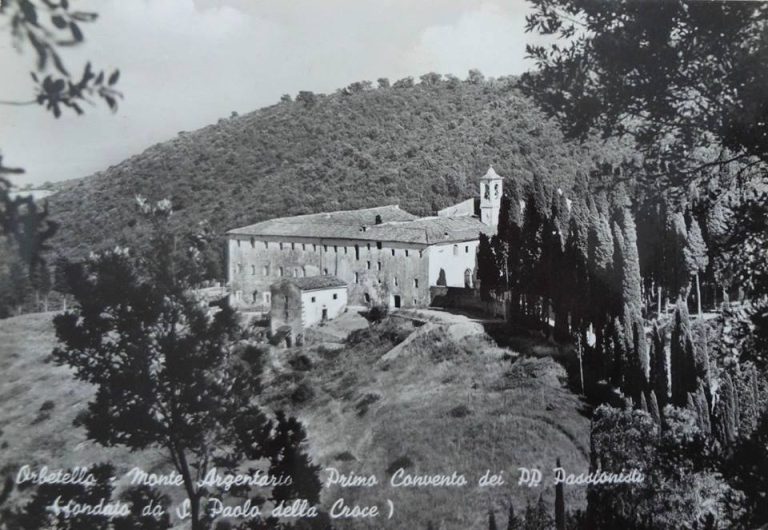
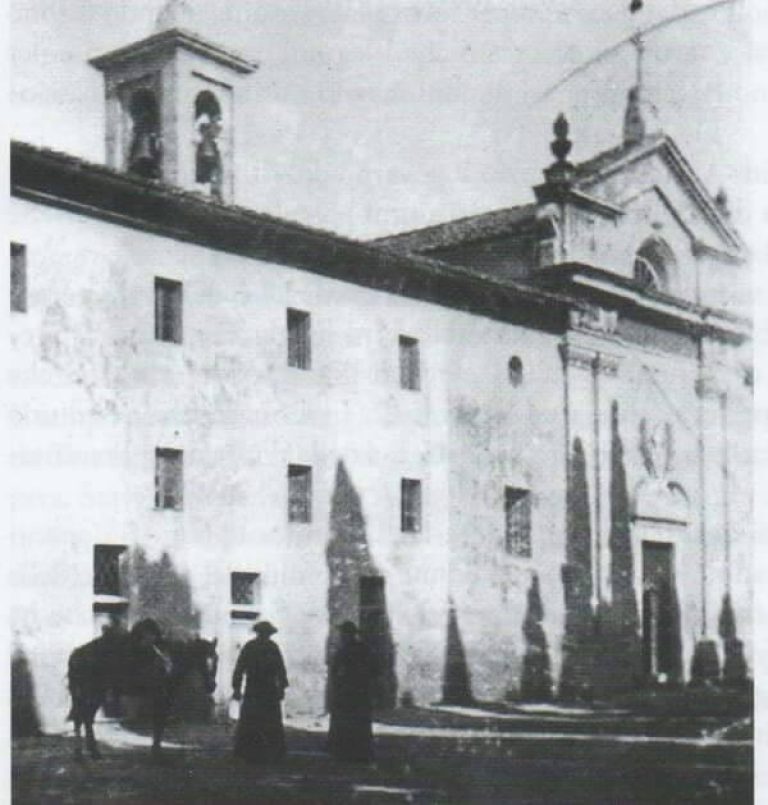
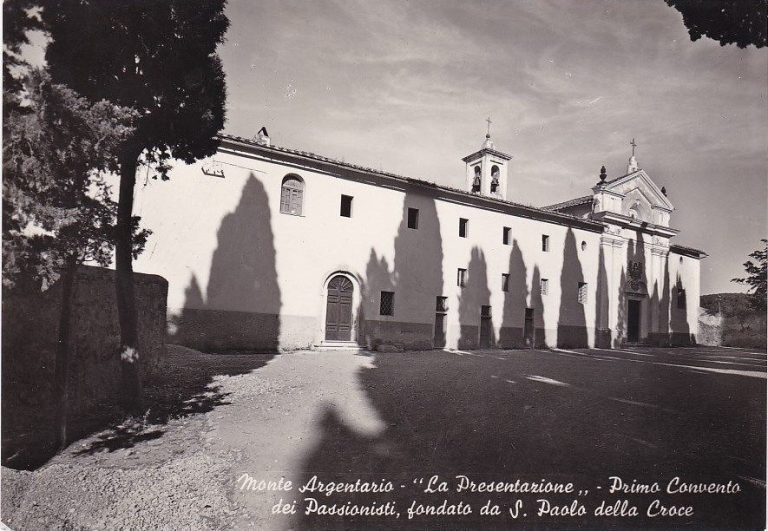
We arrive at the Convent of the Presentation in the Temple, at 273 meters above sea level, founded by Paolo Danei — later San Paolo della Croce — born in Ovada, in Piedmont, in 1694. The cornerstone was laid on March 4, 1733 , and the convent was inaugurated on September 14, 1737, with a delay caused by the War of the Polish Succession. It is said that the perimeter of the building was laid out by the saint himself, although this remains a legend handed down by local tradition. Paul of the Cross was canonized in 1867 by Pope Pius IX and died in Rome on October 18, 1775. Among the works preserved in the convent, a painting by Pietro Aldi from 1880 depicting the Virgin Mary presenting the plans for the convent to St. Paul of the Cross, along with works by Sebastiano Conca and Pompeo Batoni. The convent also houses the bronze urn containing the remains of the venerable Galileo Nicolini. December 12, 2000 , it received a visit from Pope John Paul II. Here, at her express wish, the funeral of Susanna Agnelli, mayor of Monte Argentario 1974 to 1984.
To provide the best possible experience, we use technologies such as cookies to store and/or access information on your device. By consenting to these technologies, we may process data such as your browsing behavior or unique identifiers on this site. Failure to consent or withdrawal of consent may adversely affect certain features.