Close

Home » Explore » Routes and itineraries » Hiking Trails » 1 – From the Pilarella Pier to the Lighthouses and back
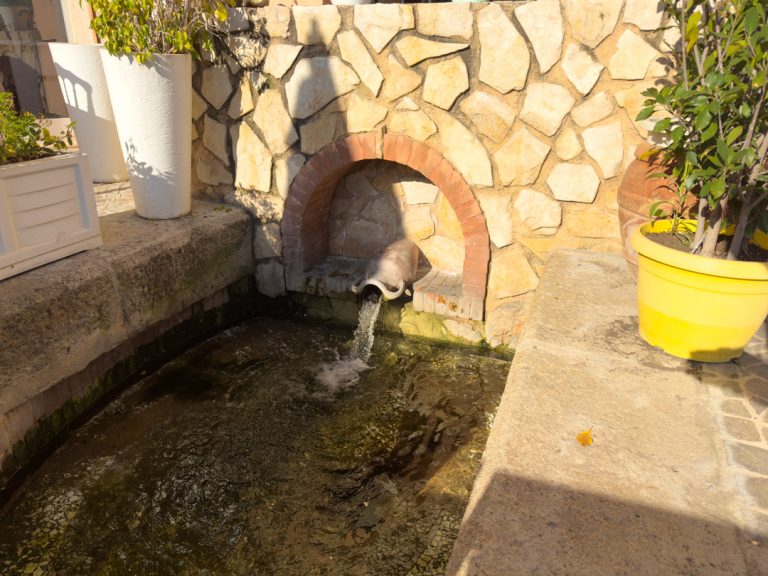
Starting point: La Pila della Pilarella
Start of Via del Molo, toward Moletto
The history of Porto Santo Stefano has its roots infresh water of the Pila della Pilarella. In a promontory with few springs, this source has been a vital point since ancient times. As early as the 6th century B.C., when Greek shipping routes crossed the Tyrrhenian Sea connecting Magna Graecia to Etruria, ships sailing along the coast found here a natural landing place where they could resupply and resume their journey.
People began to stop more and more frequently around this precious spring, paving the way over time for the emergence of the first permanent settlements. It was not until many centuries later, between the 16th and 17th centuries, were fishermen from the Gulf of Naples who shaped the true fishing community, with simple houses overlooking the sea, boats pulled ashore, and nets spread out in the sun. Thus, the Pilarella was not merely a resource, but thevery origin of the town.
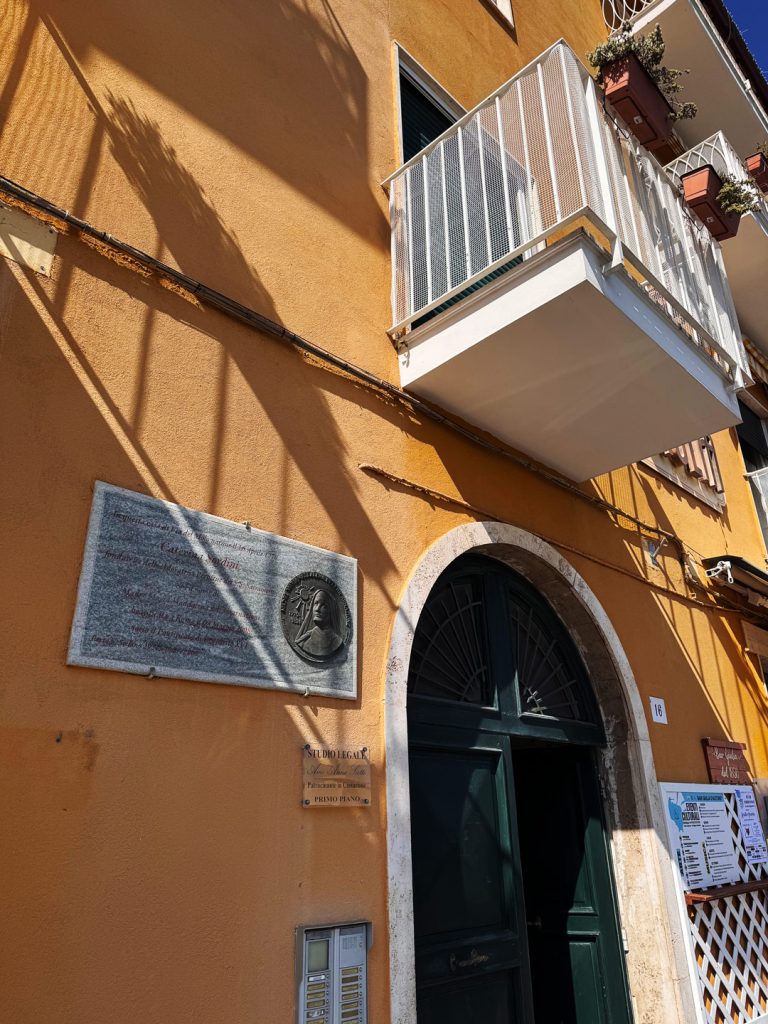
16 Via del Molo: Blessed Mary Magdalene of the Incarnation
16 Via del Molo
Caterina Sordini was born in Porto Santo Stefanoon April 16, 1770, the fourth of nine children of Lorenzo Sordini and Teresa Moizzo. The family owned a farm with a large olive grove of about a thousand trees, vineyards, and a holm oak forest. Her birthplace was located at 16 Via del Molo, in the town’s historic center, where a commemorative plaque stands today. Among the places dear to her, the holm oak of Cala Grande—still standing today—is particularly revered; it was there that she loved to pause and pray on her knees. At sixteen, she refused a marriage proposal from a wealthy shipowner and chose the religious life, joining the Franciscan Tertiaries of Ischia di Castro. At nineteen, she took her vows, assuming the name Sister Maria Maddalena dell’Incarnazione, and in 1802 she was elected abbess. In 1807, she founded the first convent of the Perpetual Adorers of the Most Holy Sacrament in Rome. During the Napoleonic exile, she was sent back to Porto Santo Stefano before being transferred to Florence. She died in Rome on November 29, 1824, and was beatified by Pope Benedict XVI on May 3, 2008.
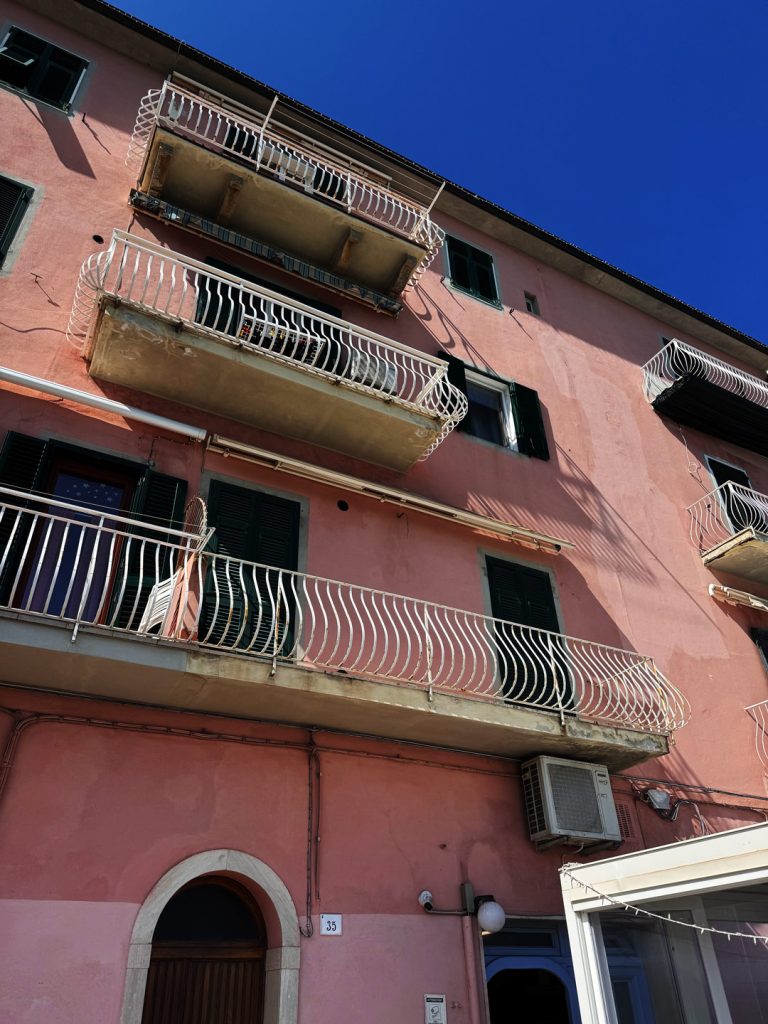
35 Via del Molo: The House of Publius Terramoccia
35 Via del Molo
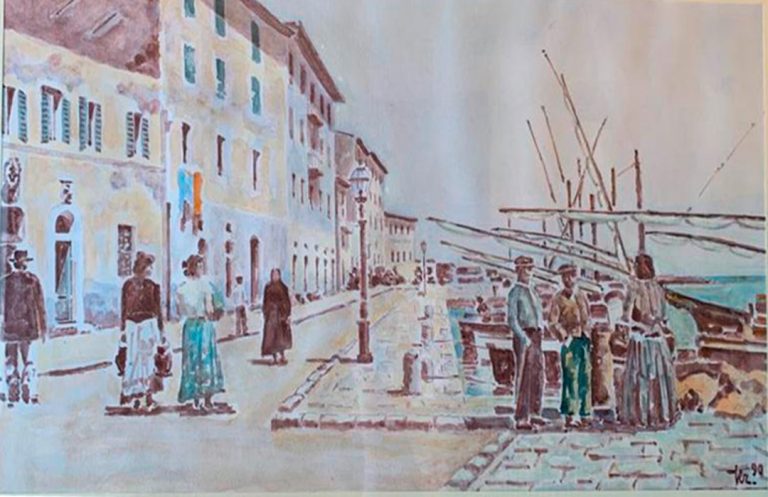
Publio Terramoccia was born in this house on January 1, 1922, Publio Terramoccia, an artist and poet who knew how to capture Porto Santo Stefano in colors and words. In his watercolors, alleyways, terraces, sun-drenched views, and scenes of daily life come to life: not imagined landscapes, but vivid memories of a town in transformation.
Terramoccia captured the spirit of the port with sensitivity and irony, leaving behind a legacy that still reflects the identity of the promontory today. Among his friends was Lucio Dalla, who deeply appreciated his art.
Via del Molo: The Maritime Heart of Porto Santo Stefano
Via del Molo, near the Moletto
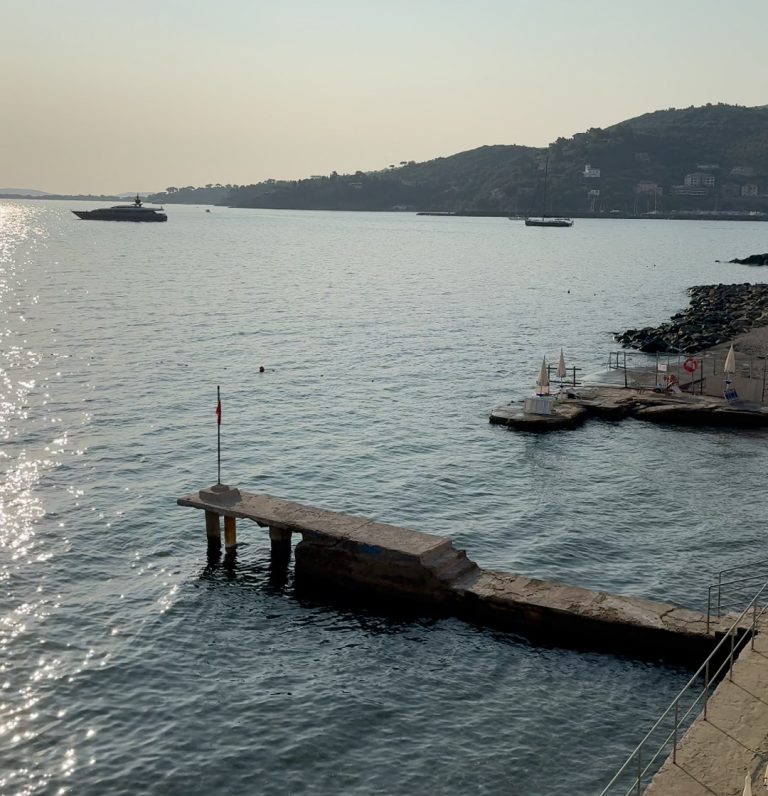
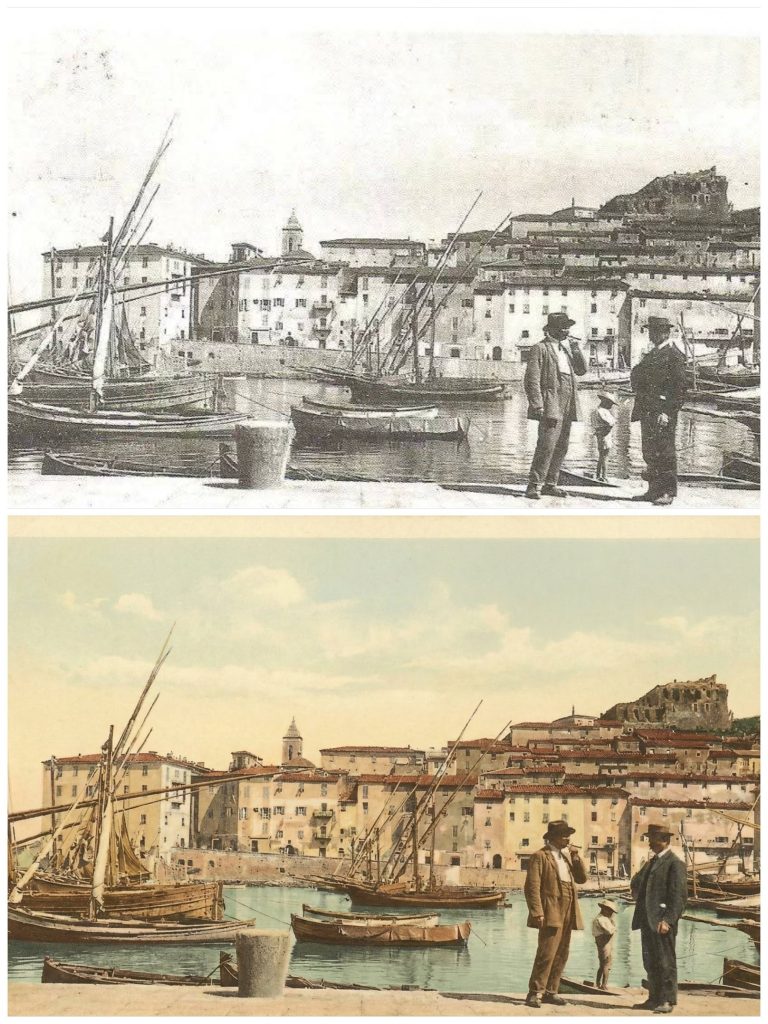
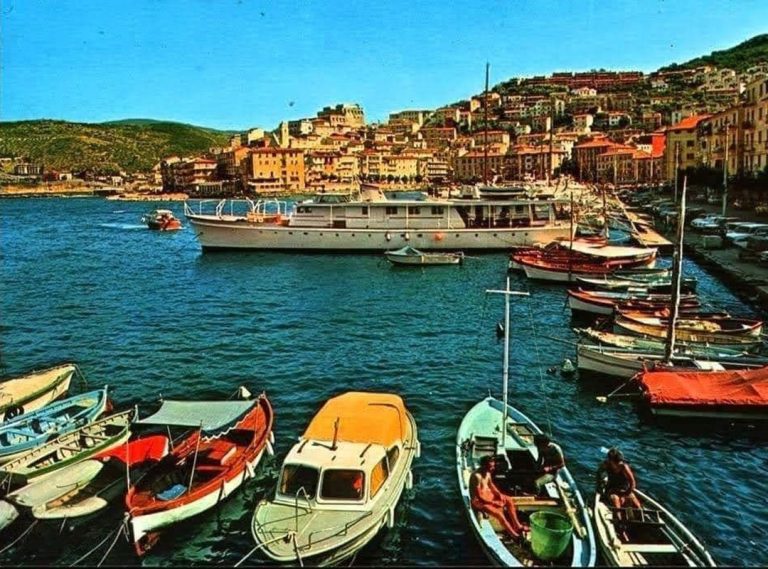
Via del Molo has always been the maritime heart of the town. It runs along the Pilarella quay, the old harbor where for centuries fishing boats would return after a day at sea. Here the catch was unloaded, deals were struck, and news was shared: it was the center of economic and social life.
The “friggère”, old warehouse-like buildings where fish was processed, sold, or cooked, becoming a gathering place for fishermen and families.
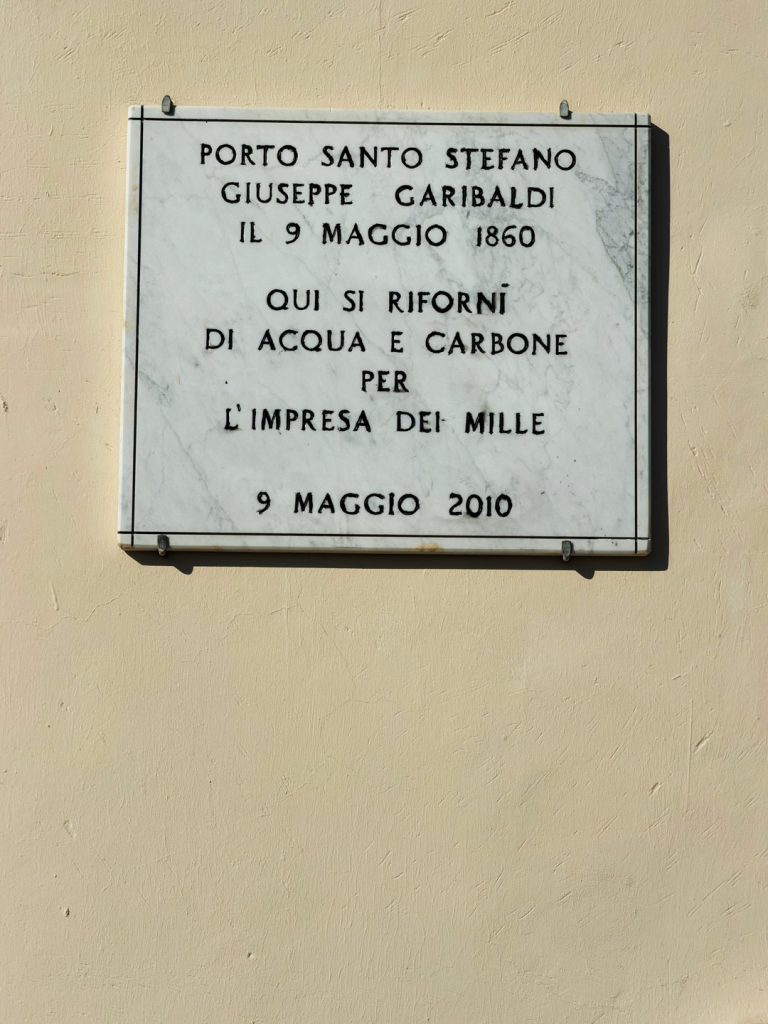
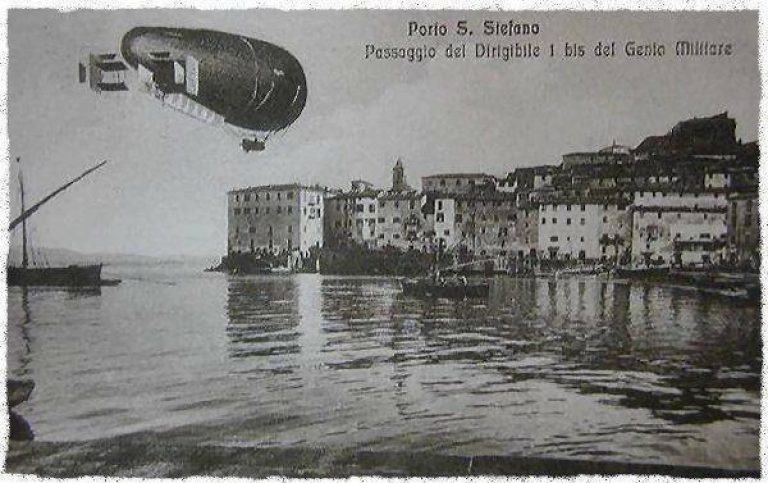
Before the port was modernized and regular ferry service was established, small boats would set sail from here bound for other ports in the Tyrrhenian Sea. On May 9, 1860, Giuseppe Garibaldi stopped at Pilarella to restock before continuing on to Sicily. A plaque, next to the headquarters of the Pilarella District, still commemorates that historic event today.
Il Moletto: The Village Seen from the Sea
The Moletto
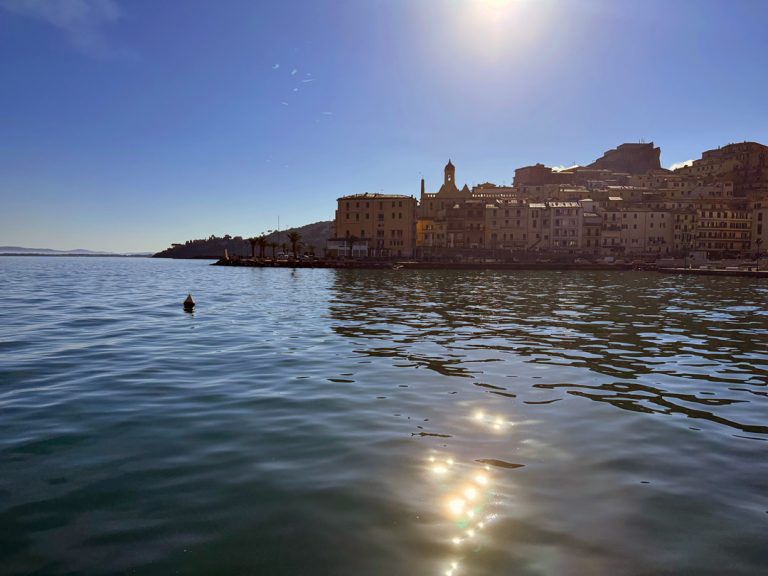
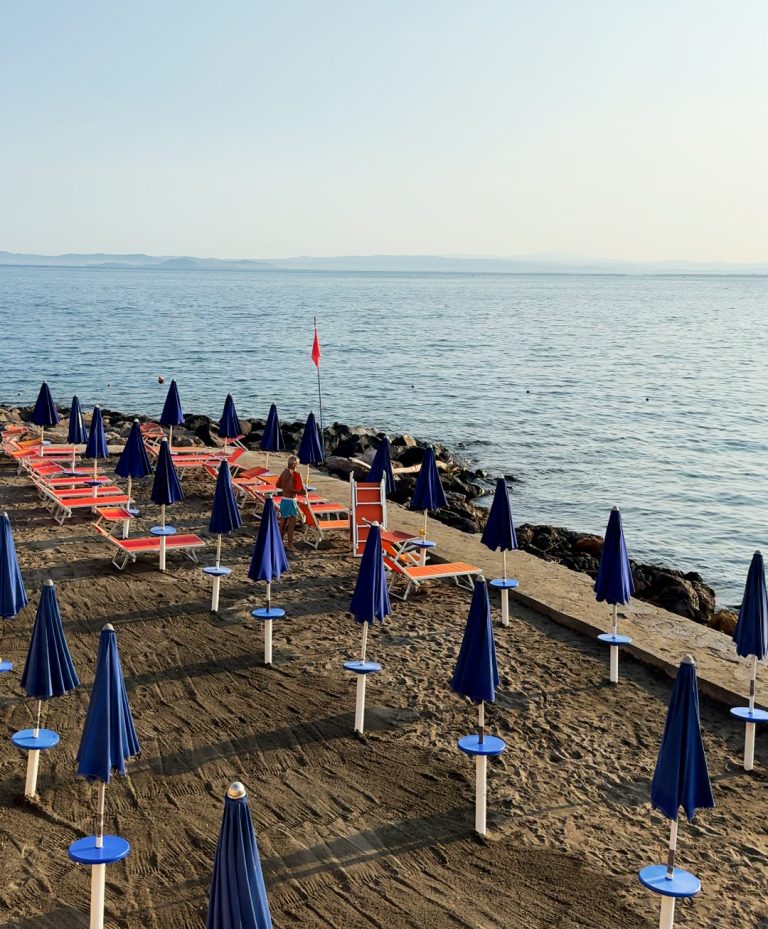
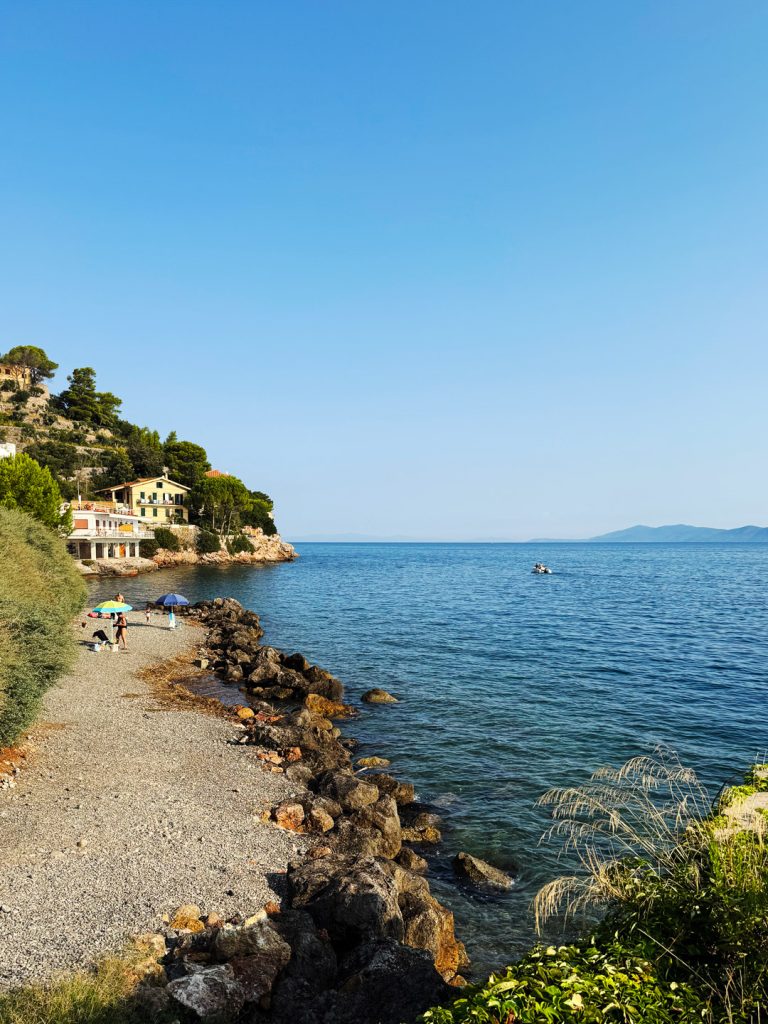
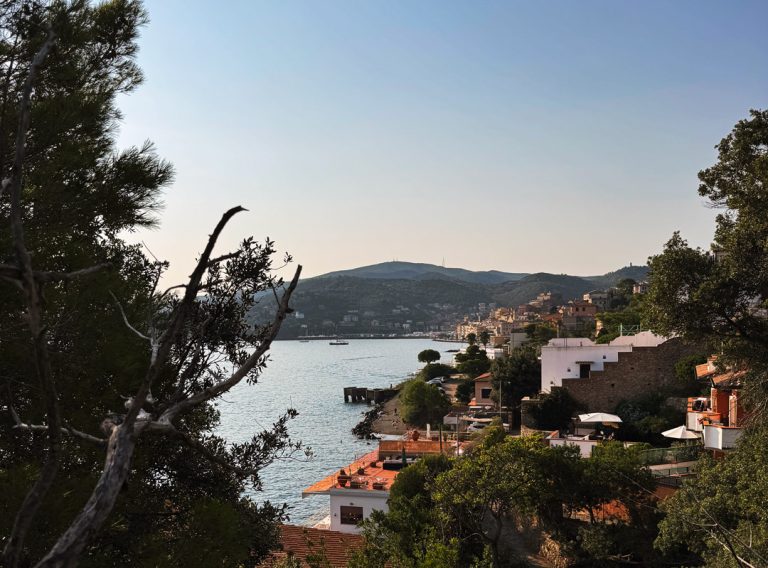
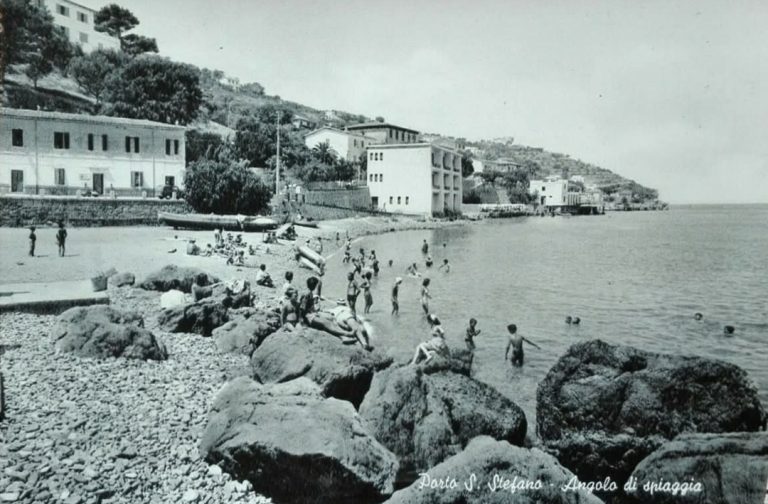
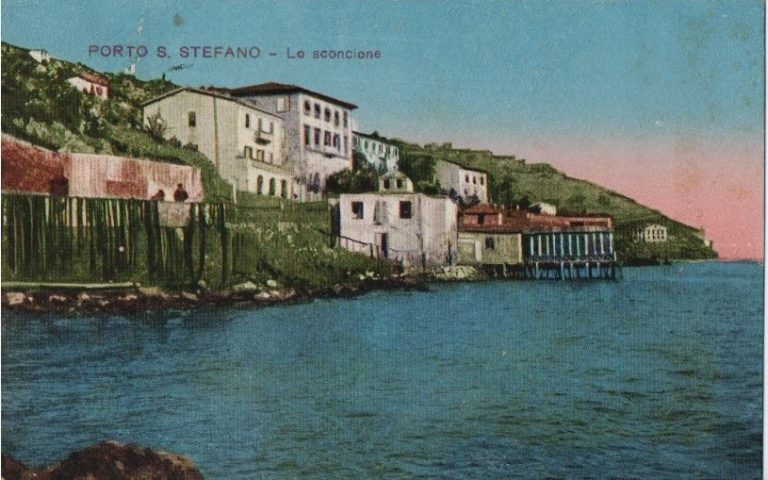
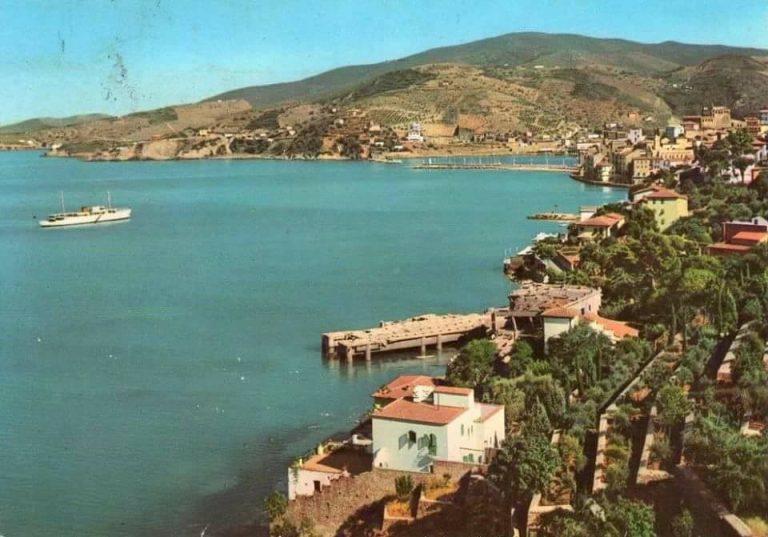
Moletto Beach is a small cove in the center of town, much loved by the residents of Santo Stefano. From here, you can enjoy a unique view: the houses clinging to the hillside, the harbor, and the Spanish Fortress looming overhead. It feels as though you’re already on a boat, suspended over the water in the middle of the gulf.
In the 1960s, this setting served as the backdrop for the video by With Fins, Speargun, and Goggles by Edoardo Vianello, becoming a symbol of a carefree, seaside Italy. Even today, Moletto is a place of gathering and remembrance, amid dives, chatter, and sunsets.
La Caletta: The Historic Beach
We are on Via Guelfo Civinini
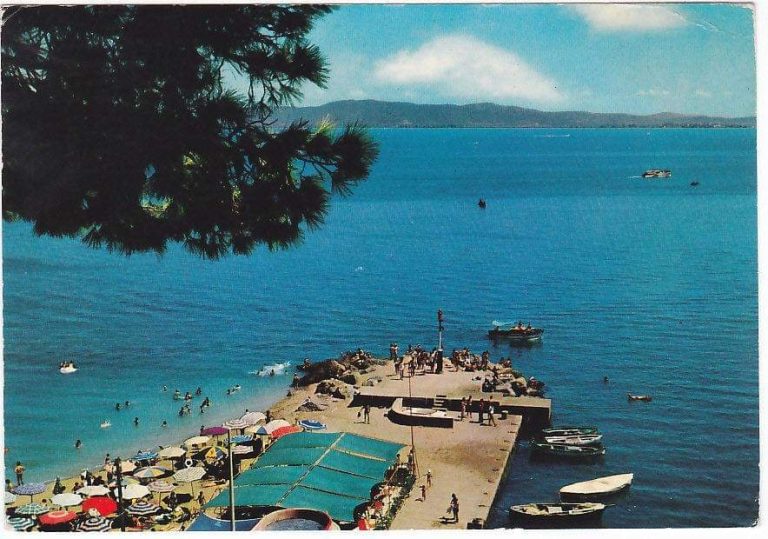
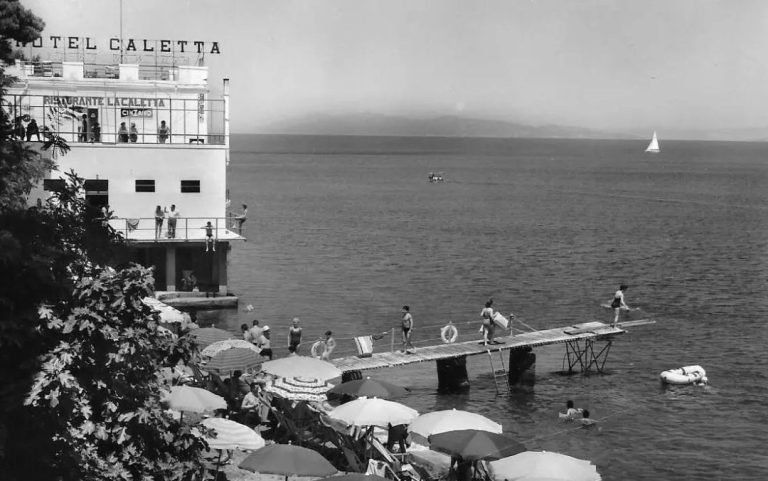
Just a short walk from the town center lies Caletta, one of the village’s most picturesque beaches. The first beach resortswere established here, complete with cafés, restaurants, and bathing platforms.
It retains its charm to this day: the water is crystal-clear, the seabed drops off steeply, and it’s ideal for swimming and diving. Among the rocks and small coves, you can spot colorful fish and, occasionally, seahorses. La Caletta remains a iconic beach, cherished by generations of Santostefanesi.
The Siluripedio: Industrial Archaeology by the Sea
Continuing along Via dei Fari
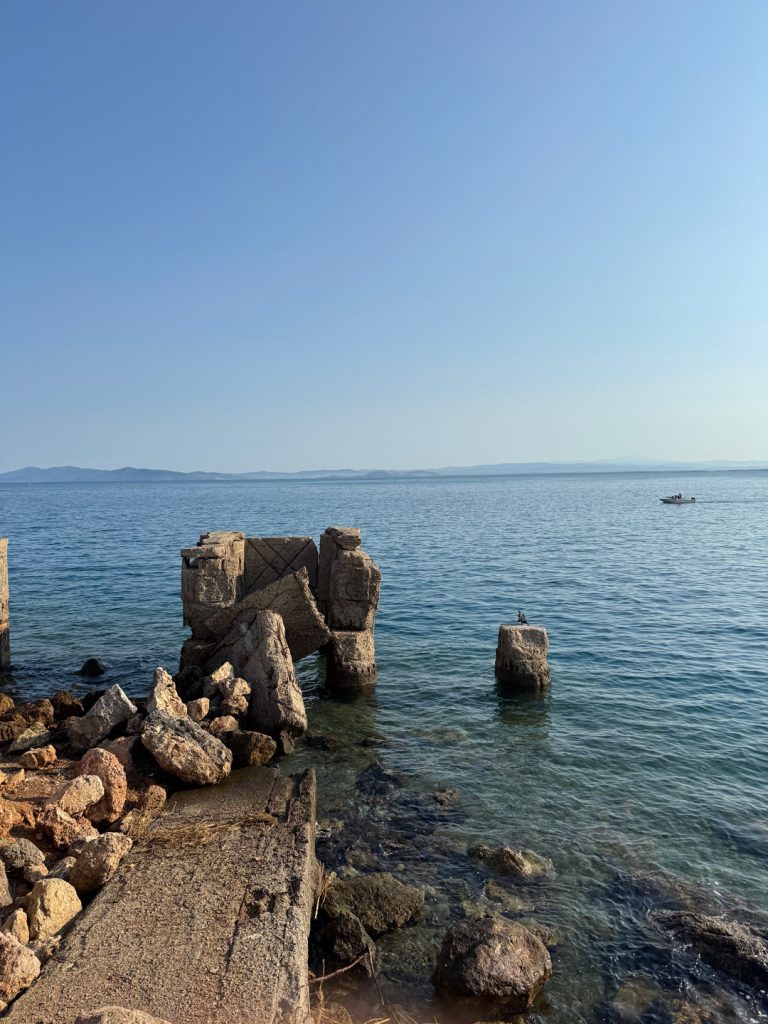
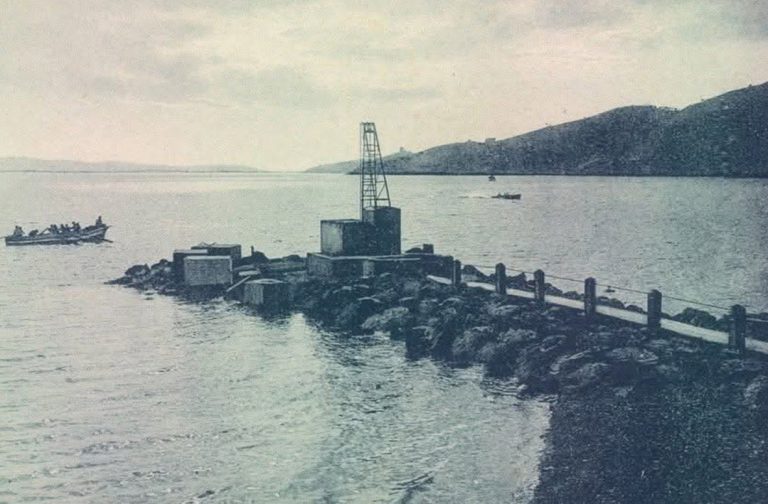
Continuing past La Caletta, you come to Siluripedio, a small rocky cove linked to the history of World War II. In 1943, the Moto Fides Torpedo Factory built a facility there for torpedo testing, but the plant never became operational and was destroyed shortly thereafter.
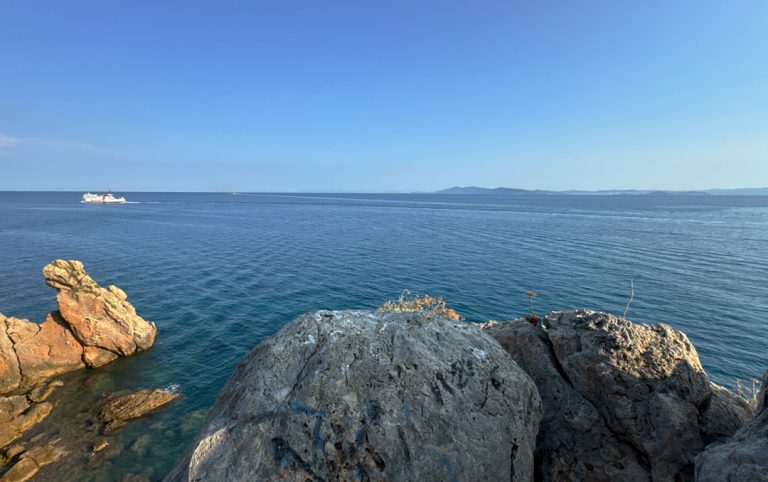
Today, columns and structures remain, some of them submerged, bearing witness to industrial archaeology overlooking a clear, deep sea. Nearby is also the Acqua Purgativa inlet, an ancient natural saltwater spring.
La Madonnella
Located on Via dei Fari at the start of the cliffside trail
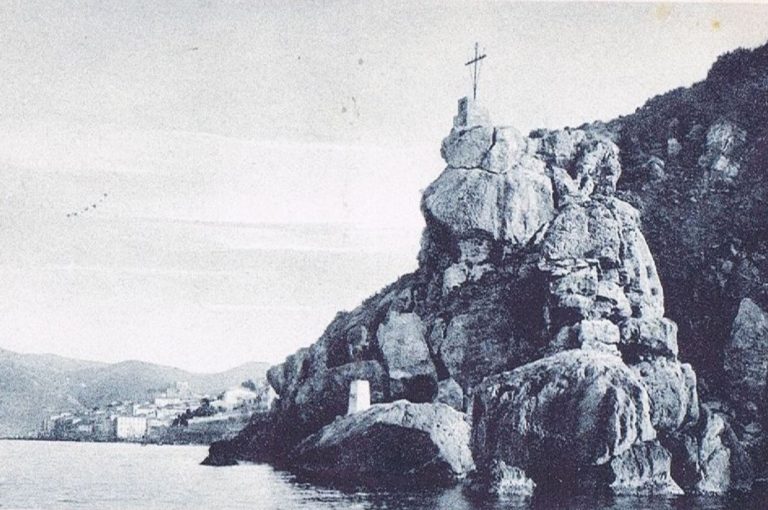
A short distance further on, on a rock near the lighthouses, stands the Madonnella, a small statue facing the sea. Placed there by fishermen as a sign of devotion and protection, it stands as a silent symbol of the bond between faith and seafaring life. Even today, those passing by boat or on foot along the cliff turn their gaze toward this unobtrusive presence, entrusting their thoughts and hopes to it.
The Lighthouses of Punta Lividonia: Sentinels of Light
Arrival at the Lighthouses
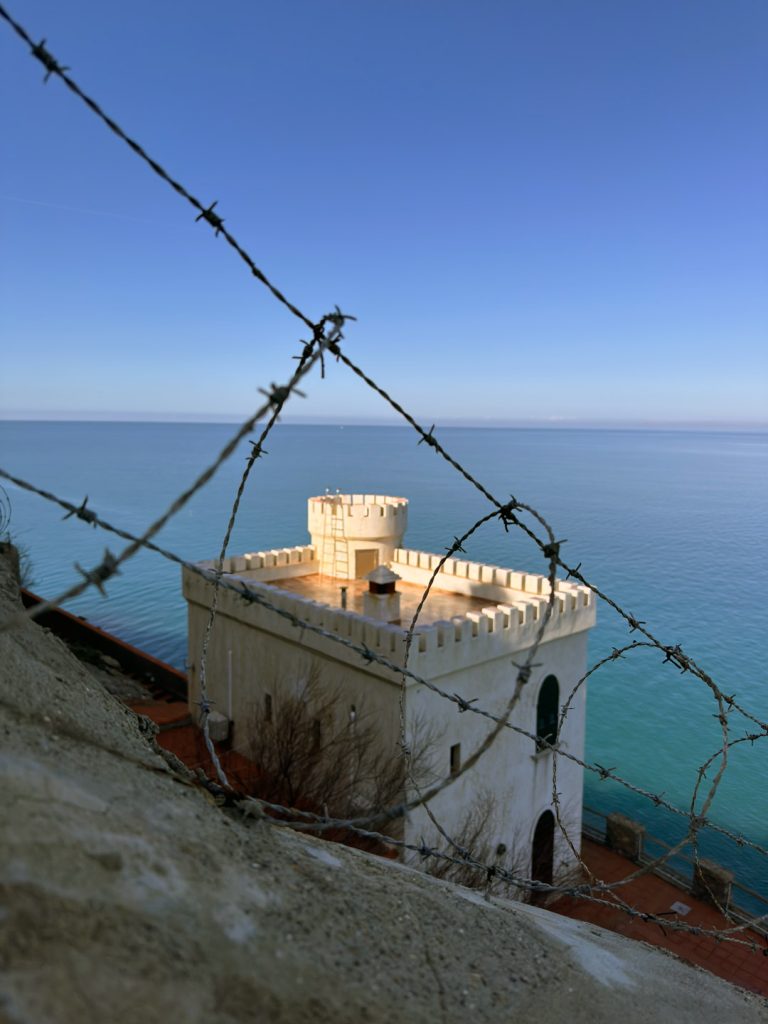
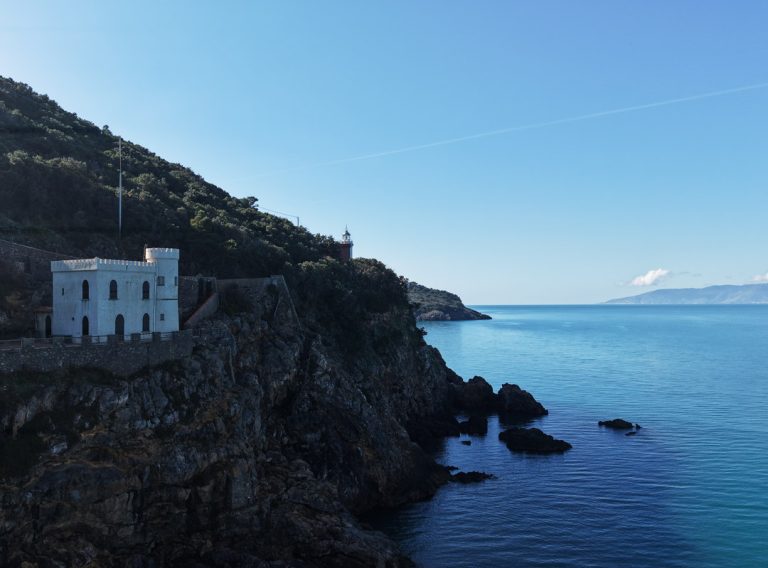
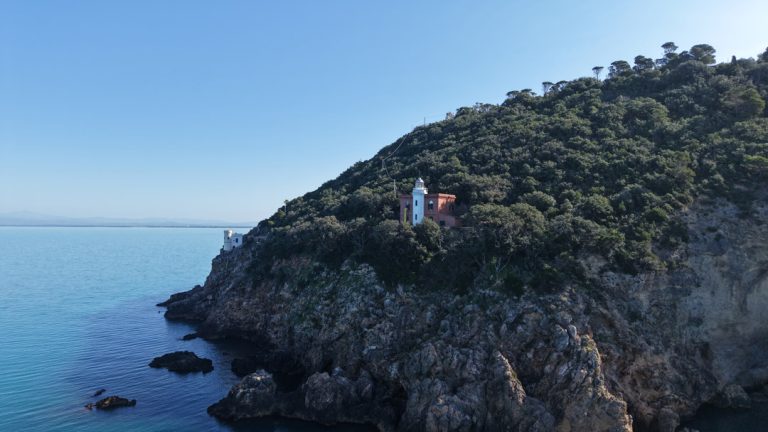
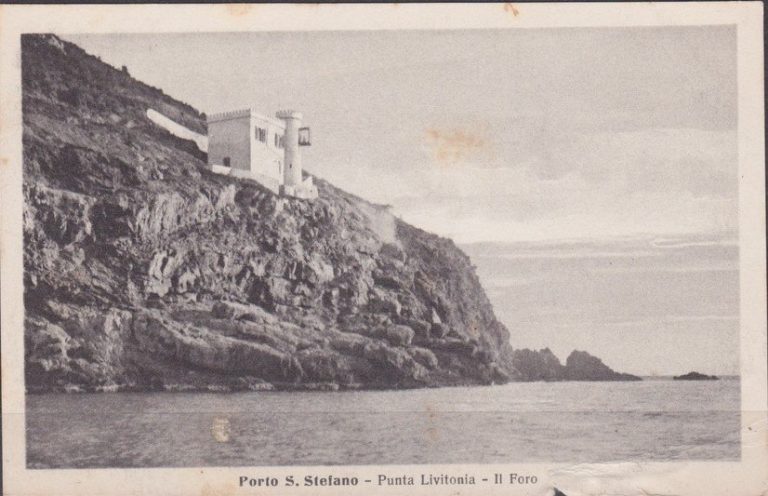
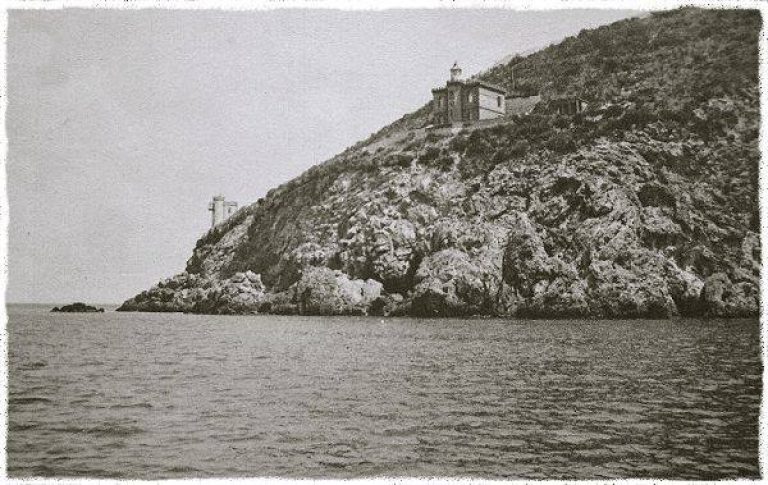
At the tip of the cliff stand the lighthouses of Punta Lividonia, true sentinels of the sea. The first maritime beacon was activated in 1883; the current lighthouse, built in 1926, continues to guide navigation with its flashes visible up to about 16 nautical miles.
Once home to lighthouse keepers and their families, they are now automated, yet they remain a symbol of the deep bond between the town and the sea. By day, they emerge from among the rocks and Mediterranean scrub; by night, their light still marks the ancient rhythm of navigation.
To provide the best possible experience, we use technologies such as cookies to store and/or access information on your device. By consenting to these technologies, we may process data such as your browsing behavior or unique identifiers on this site. Failure to consent or withdrawal of consent may adversely affect certain features.